I.
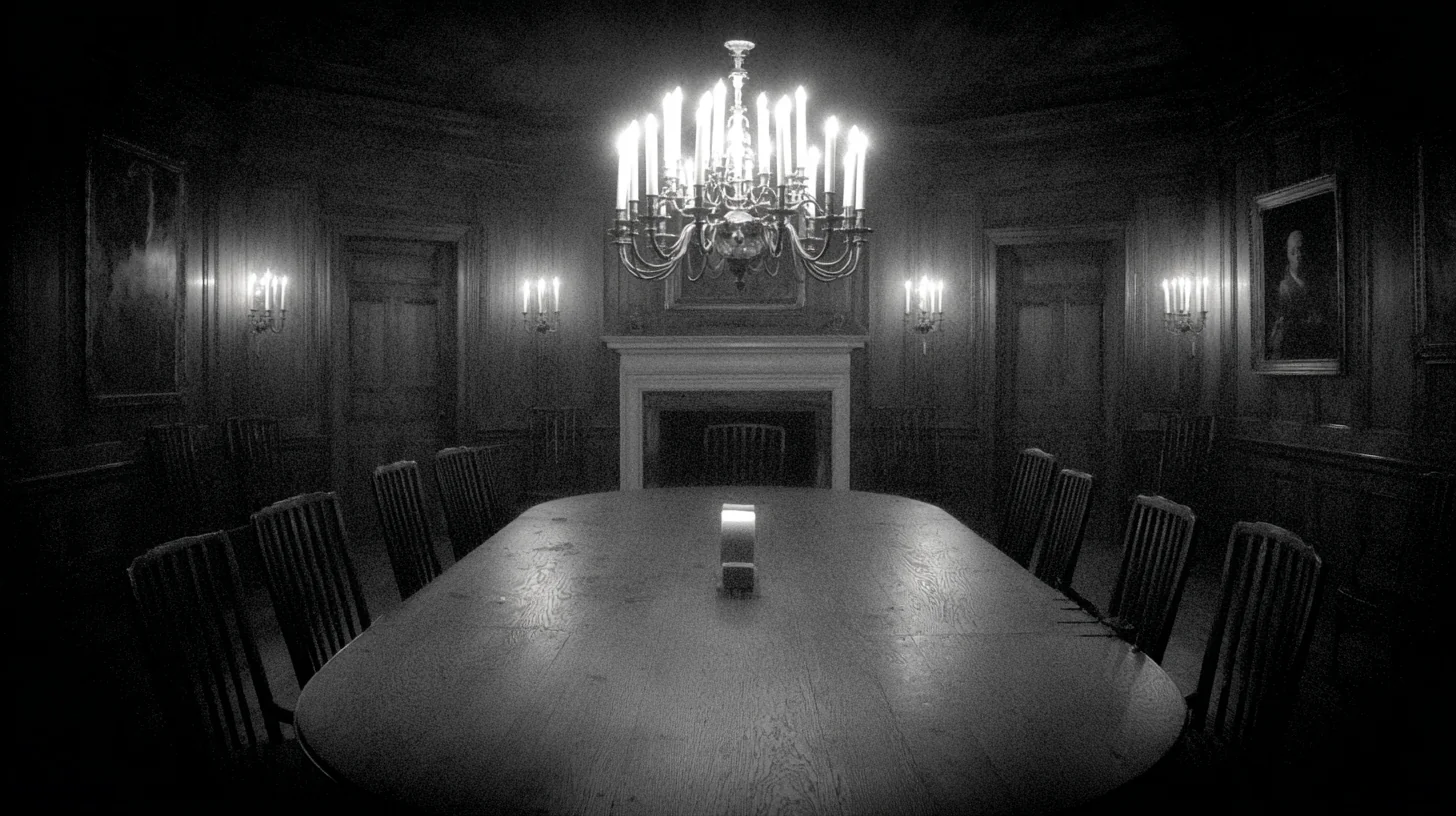
In the spring of 2014 I was given access, by reason of an inheritance I will not describe here, to a small archive of documents that had been kept in a country house in Buckinghamshire by a man who served in the British Foreign Office between 1968 and 1995. The documents pertained, in his manuscript notes, to the institution which keeps its records elsewhere and its secrets in the room with no door. I read these papers over a period of fourteen months. I went into the archive a historian. I came out of it a man who had begun to dream.
What I am about to describe is the figure who appears, by various names, in every century of the documents I read. I have been told by people I trust that I should not write what I am about to write. I am writing it anyway. The reader will understand why before they reach the end of these pages.
II. ON THE PROBLEM OF NAMING HER
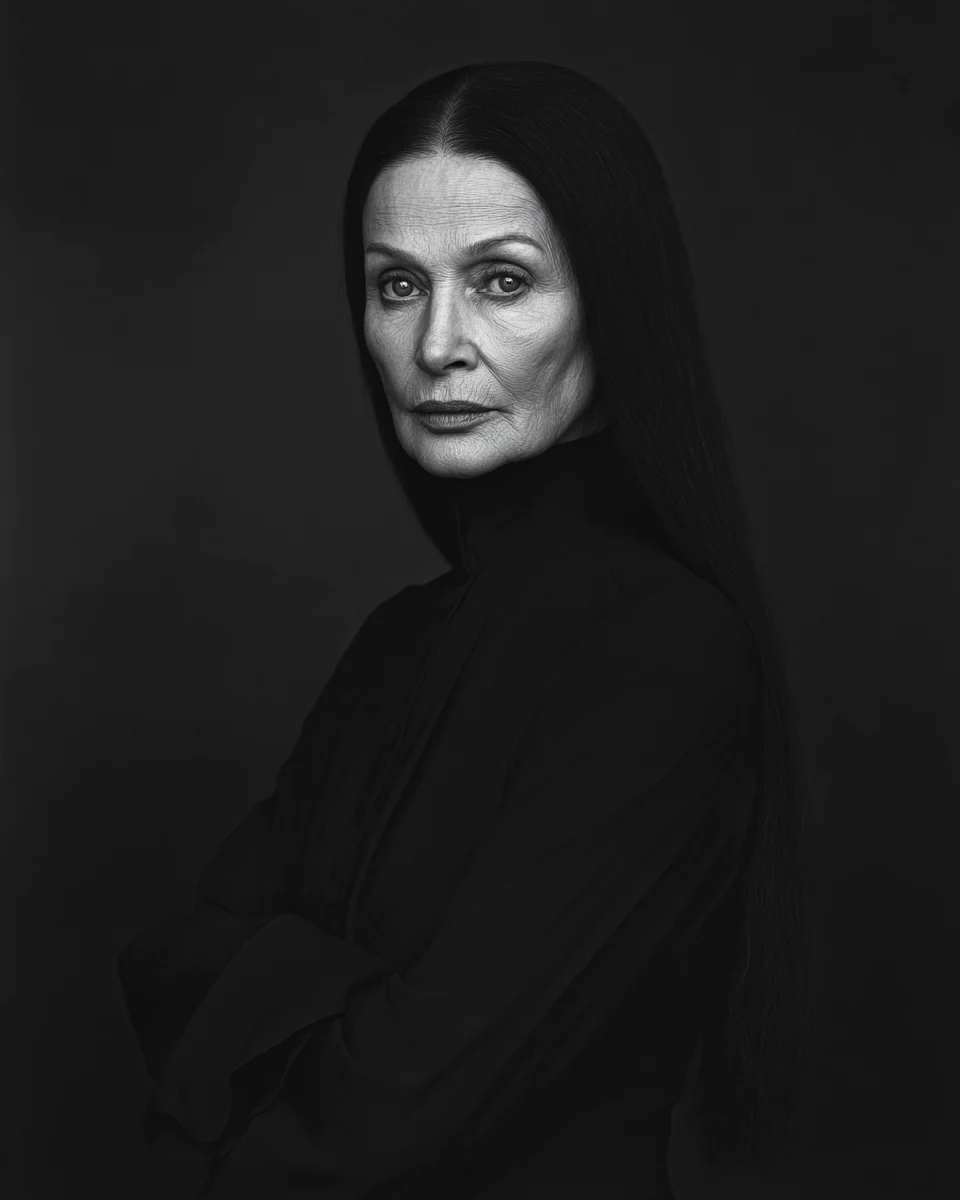
She has many names because she is older than language.
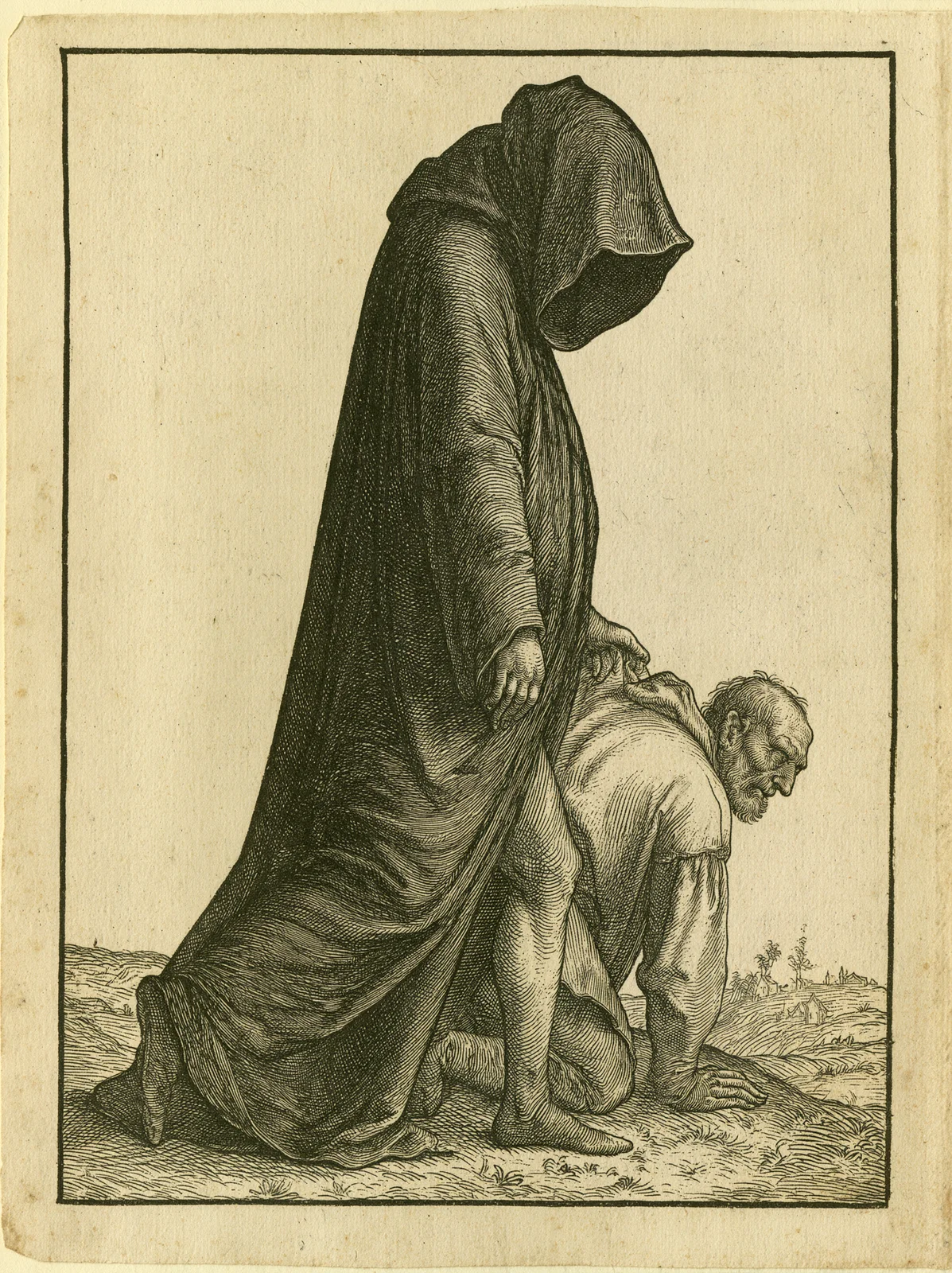
The Slavic-speaking members of the institution call her MORA, which in the folklore of the Carpathians is the demon who sits on the chest of a dying man and steals his breath. The word has cognates in nearly every European tongue: it gives us nightmare in English, mareridt in Danish, mará in Hungarian. In all of them the figure is the same. She is female. She is silent. She arrives at the bedside of those about to end.
The Romans who served the institution between approximately 80 BC and the fall of the Western Empire called her LIBITINA, who in their official cult was the goddess of funerals — but in their private texts, in the documents I read in Buckinghamshire, she is something stranger. The Romans understood her as the personification of the moment after death rather than death itself, and they paid her in coins of copper rather than silver, on the principle that what you owe her is small but you must always owe her something.
The earliest texts in the archive give her name as ACHLYS. This is Hesiod’s name for her, used in the Shield of Heracles and once, obscurely, in a fragment of the Theogony that nearly every modern editor has removed as a later interpolation. Achlys, in the Theogony fragment, precedes Chaos. She is, before there is anything, the mist that obscures the eyes. She is older than the world she came to govern.
I have, in these last four years, encountered her by other names in other archives. The records of a 12th-century Bulgarian monastery name her ZHIVA, which is not the Slavic earth-goddess but a darker figure who shares the name. A 14th-century Persian manuscript I read in Istanbul names her PARI-DOKHT — the daughter of the veil. I have stopped counting.
III. WHAT THE FOUNDERS SAW IN 309 BC
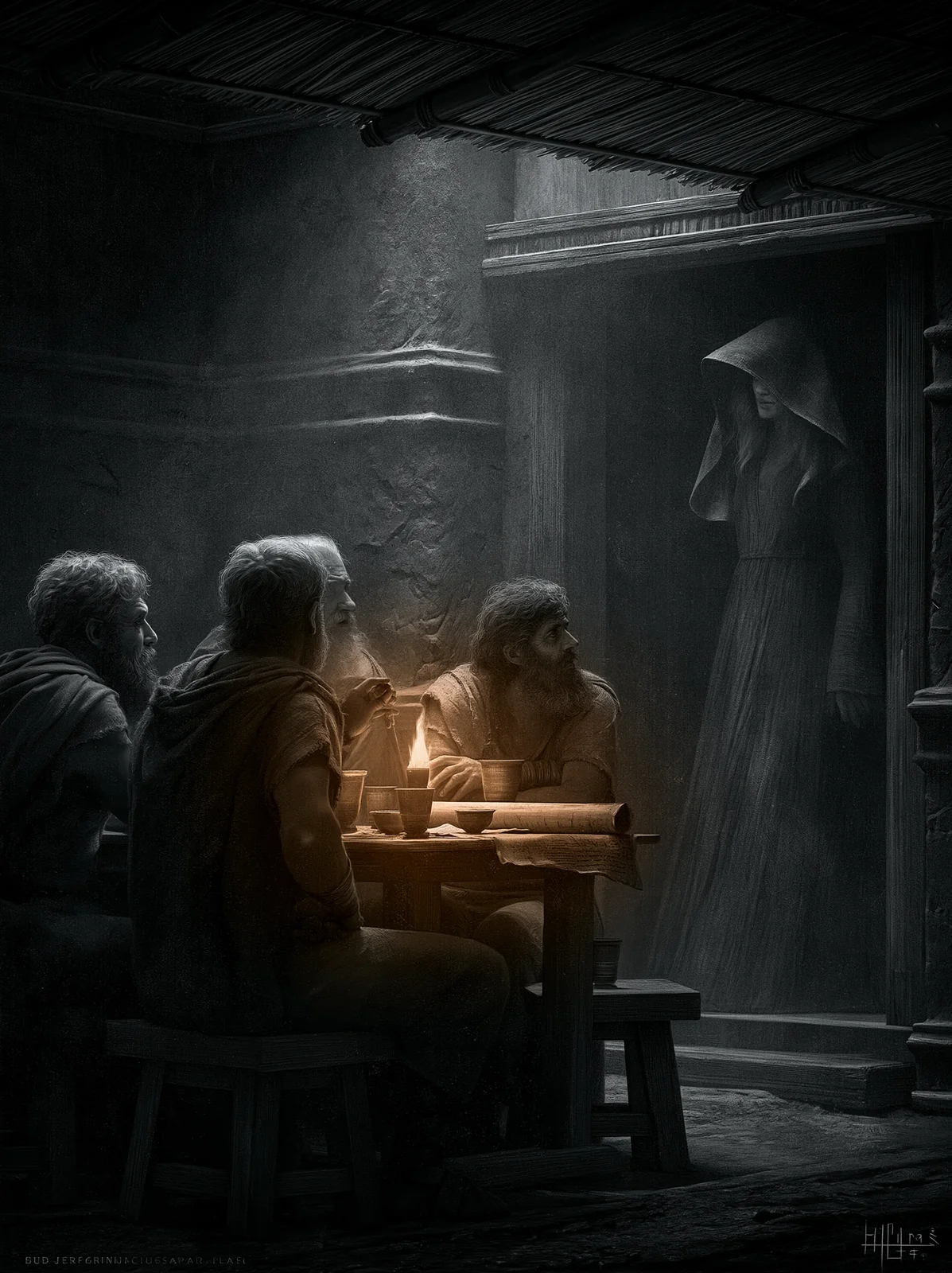
The institution’s foundational text, which is not available in any published edition and which I will not describe further here, records that in the late summer of 309 BC four people in the Macedonian town of Pella met in a wine merchant’s stall after the marketplace had closed. They had been keeping, in private, a record of the killings they had been witnessing in the Successor Wars. They were not, by any contemporary measure, important people. They were a soldier of Alexander’s army returned from Persia, an astronomer in exile from the court of Antigonus the One-Eyed, a wine merchant, and a Greek physician who had spent his youth enslaved by Spartans and his maturity training under Hippocratic followers in Cos.
That night, by the four corroborating accounts, a fifth person joined them. She was not, they wrote, a person they had seen enter. She was already in the room. The wine merchant, in the account that has survived, asks her name. She does not answer. The physician asks her what she wants. She tells them what she wants. The remaining hour of their meeting is recorded, but the language in which it is recorded is in places no longer comprehensible to modern Greek scholars, who have read the passage and pronounced it ungrammatical, untranslatable, or both.
What they understand from her — what they say they understand — is the substance of what would become the first six laws of the institution they founded that night, and which has continued, in one form or another, for the twenty-three centuries since. The Seventh Law she keeps. She tells them, in the surviving account, that she will return when she wishes to know what they have done with the first six.
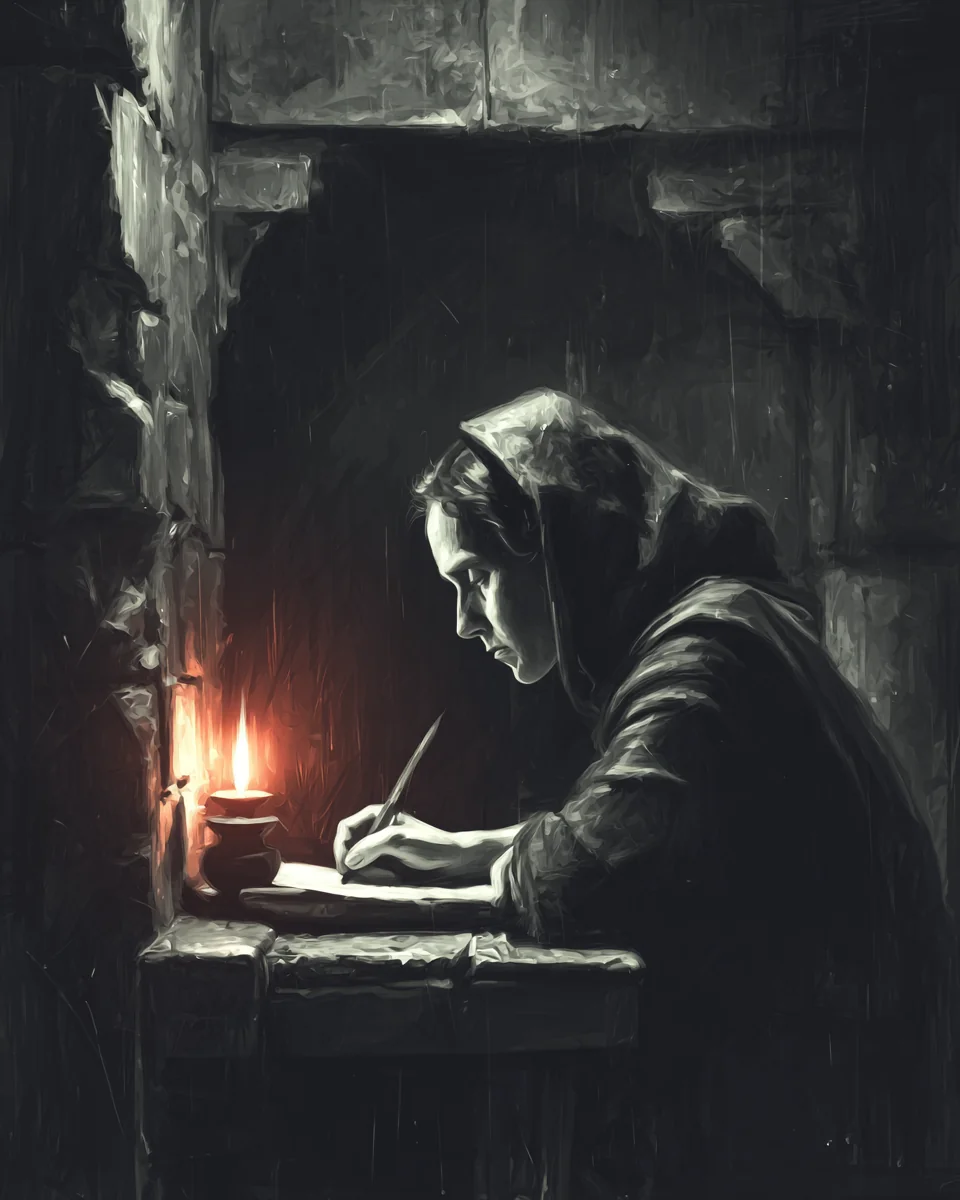
The physician, the last of the four alive, wrote the Seventh Law down once. He did so in 298 BC in a stone room in Damascus on a piece of papyrus. He burned the papyrus the same night. The Seventh Law has not been written down since.
IV. THE SEVENTH LAW
I do not know what the Seventh Law is. I want to be clear about this. I have read every document in the Buckinghamshire archive that survives in legible form, and the Seventh Law is, in all of them, the absence around which the writing organizes itself.
What I have come to understand — and what I cannot prove — is that the Seventh Law is not a prohibition. It is a description.
The first six laws of the institution are practical: they describe how to recruit, how to vote, how to remove a member, how to maintain continuity, how to survive external interference, how to keep silence. The Seventh Law is something else. The Seventh Law is, I now believe, the description she gave them in 309 BC of what humans are, of what they require to be governed, and of what would happen if she were not present to require it.
The Seventh Law is what humans are not permitted to know about themselves.
It is, in this respect, identical to the wisdom of every mystery cult I have studied. The Eleusinian Mysteries did not have a content; they had a moment, a revelation that those who experienced it could not afterward describe. The Mithraic initiates were sworn to silence not because their doctrine was secret but because it could not be spoken. The Seventh Law of the institution founded in Pella in 309 BC is the same kind of knowledge. It is the kind a human cannot survive holding.
This is, I believe, what the institution has been protecting for twenty-three centuries: not the secret of itself, but the secret of us.
V. ON THE HERETICS
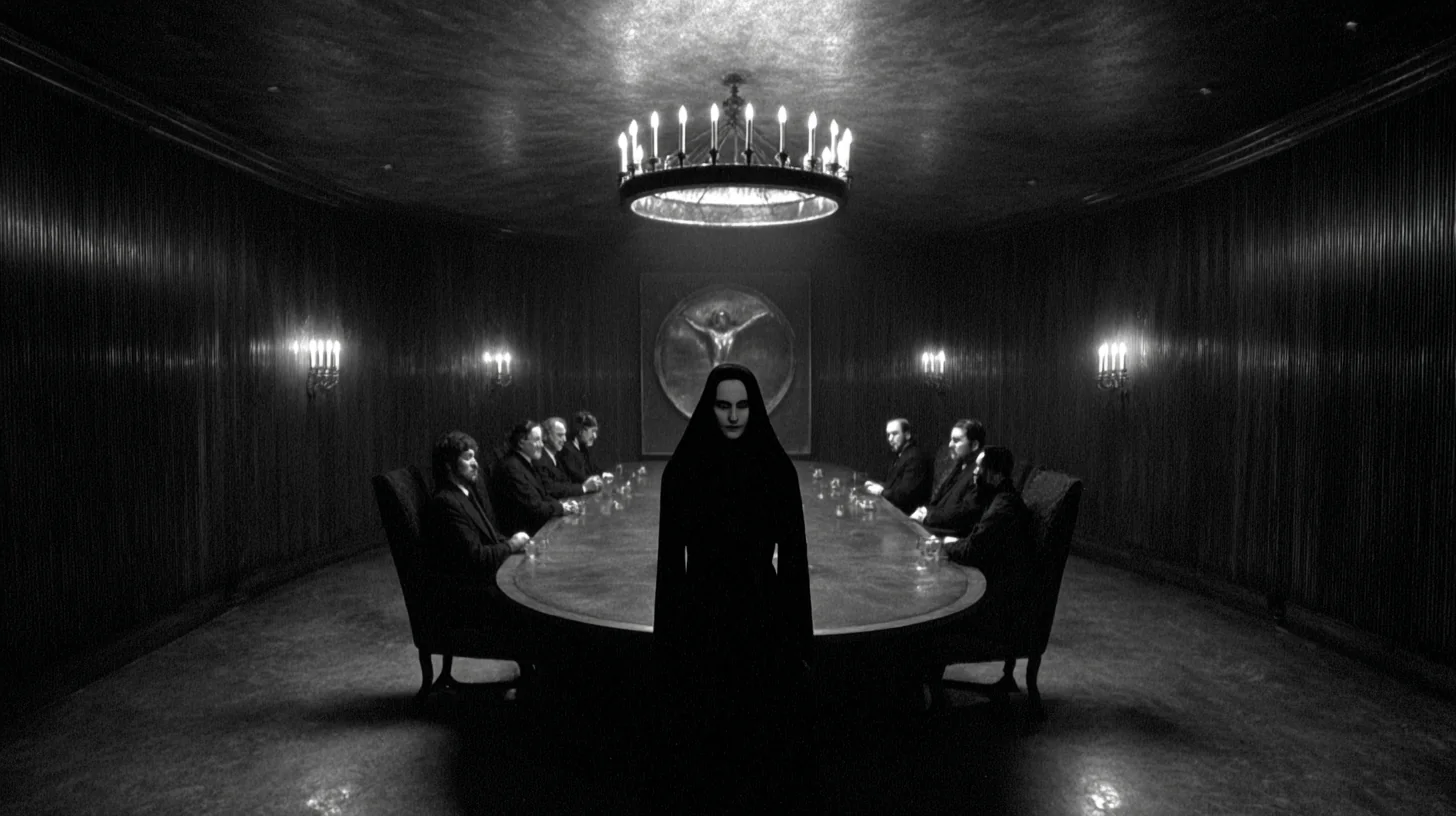
Across the centuries the institution has identified, by its own internal language, a class of people it calls Heretics. These are not the Heretics of the Church. The institution does not concern itself with the Church. The Heretics of the institution are those who have tried to know the Seventh Law.
The archive records seven by name, though the implication of the documents is that there have been many more.
The first, paradoxically, was the Greek physician — who wrote the Law down even though he then burned it. The institution counts him as a Heretic posthumously, with affection. He is described in the surviving text as the founding Heretic, the necessary first violation.
The second was a Byzantine theologian in the year 1057, who attempted to deliver a sermon naming her. He was taken from the pulpit before he reached the third sentence. His body, in the account, was never recovered.
The third was a Spanish cardinal in 1574, who tried to confess her existence to the Inquisition. The Inquisition declined to hear the confession. The cardinal was, by morning, no longer in his quarters.
The fourth was a French philosopher in 1789 who tried to integrate her into the revolutionary cult of Reason. He survived the Revolution. He did not survive the Directory.
The fifth was a Russian poet in 1903 whose final published work — a small printing of two hundred copies, almost none of which survive — contains a four-line poem in which she is named by an obscure Bulgarian variant of Mora. He drowned in a canal in St Petersburg the following winter. He did not, by the testimony of the boatman, fall.
The sixth I will not name here. The institution will name him eventually, in their own way, and I do not wish to do it for them.
The seventh, I have come to understand in the last six months, is myself.
VI. THE EVIDENCE
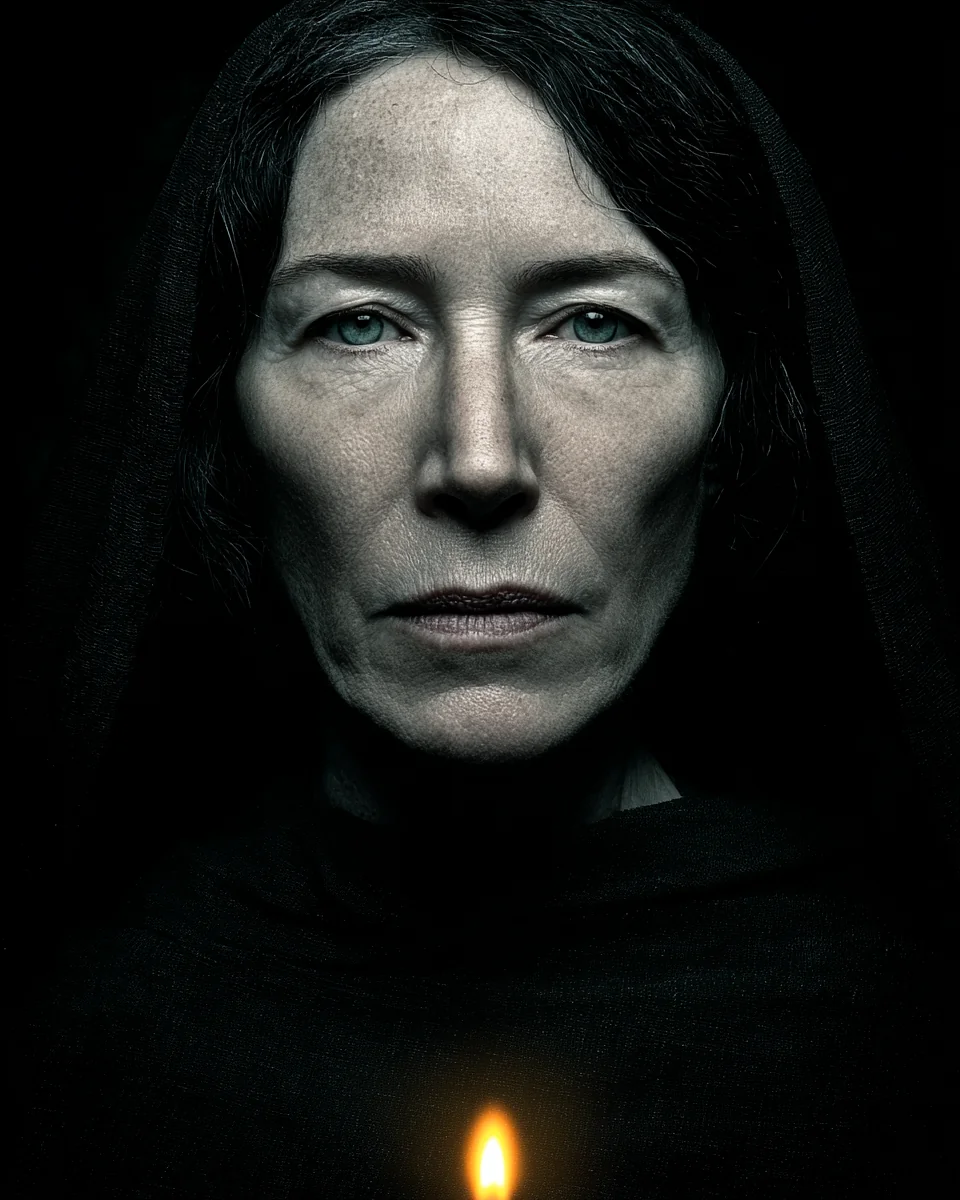
I include below the photographic evidence I have collected for the existence of the figure I have been describing. None of these images are forgeries to my knowledge. Some of them should not exist. I will not, in the limited space remaining to me, attempt to explain how I have come into possession of them.
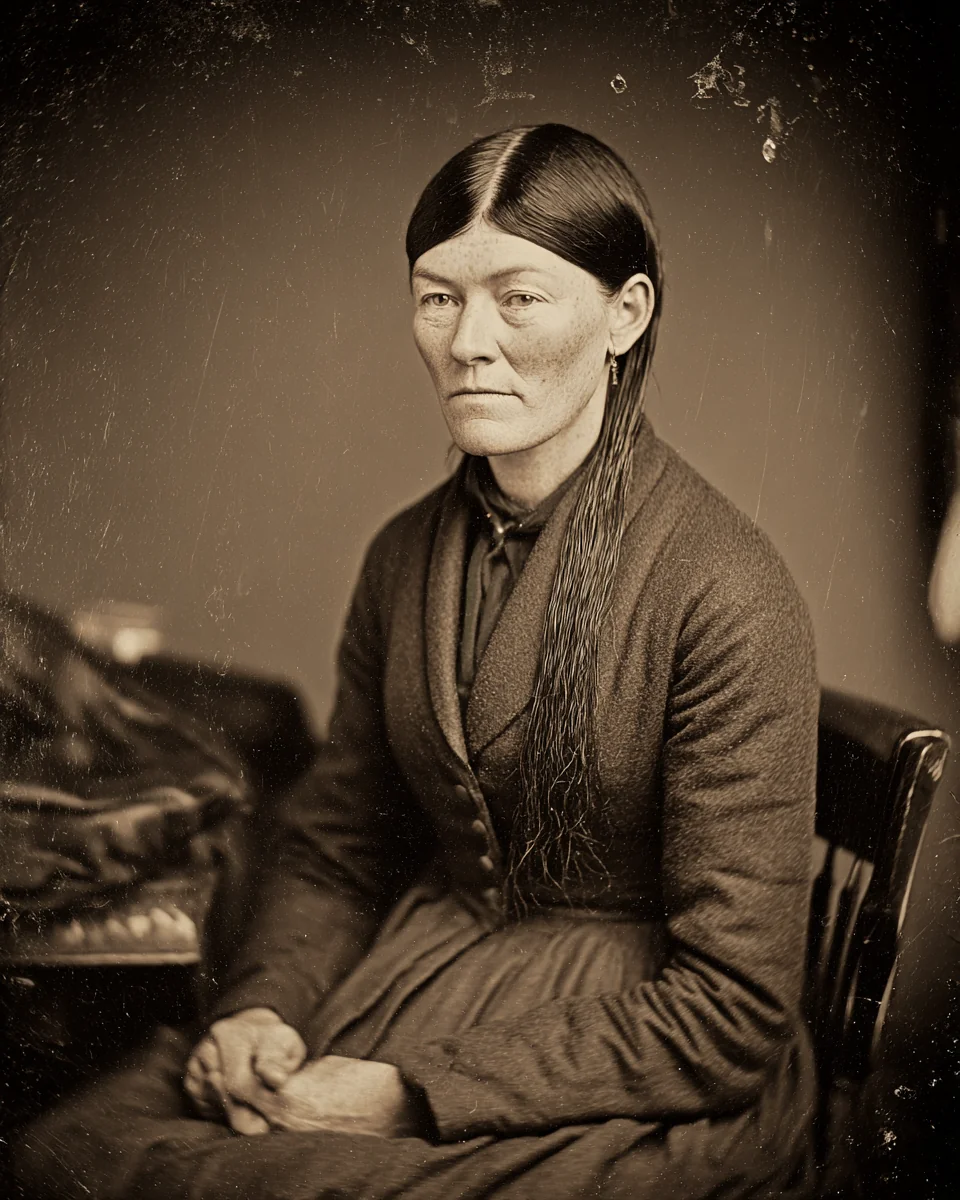
The first is a daguerreotype dated 1843, made at a studio in Edinburgh that no longer exists. The subject is unidentified in the studio’s records, which I have inspected. The plate has degraded substantially in the past century, but the face is unmistakable to anyone who has seen it elsewhere.
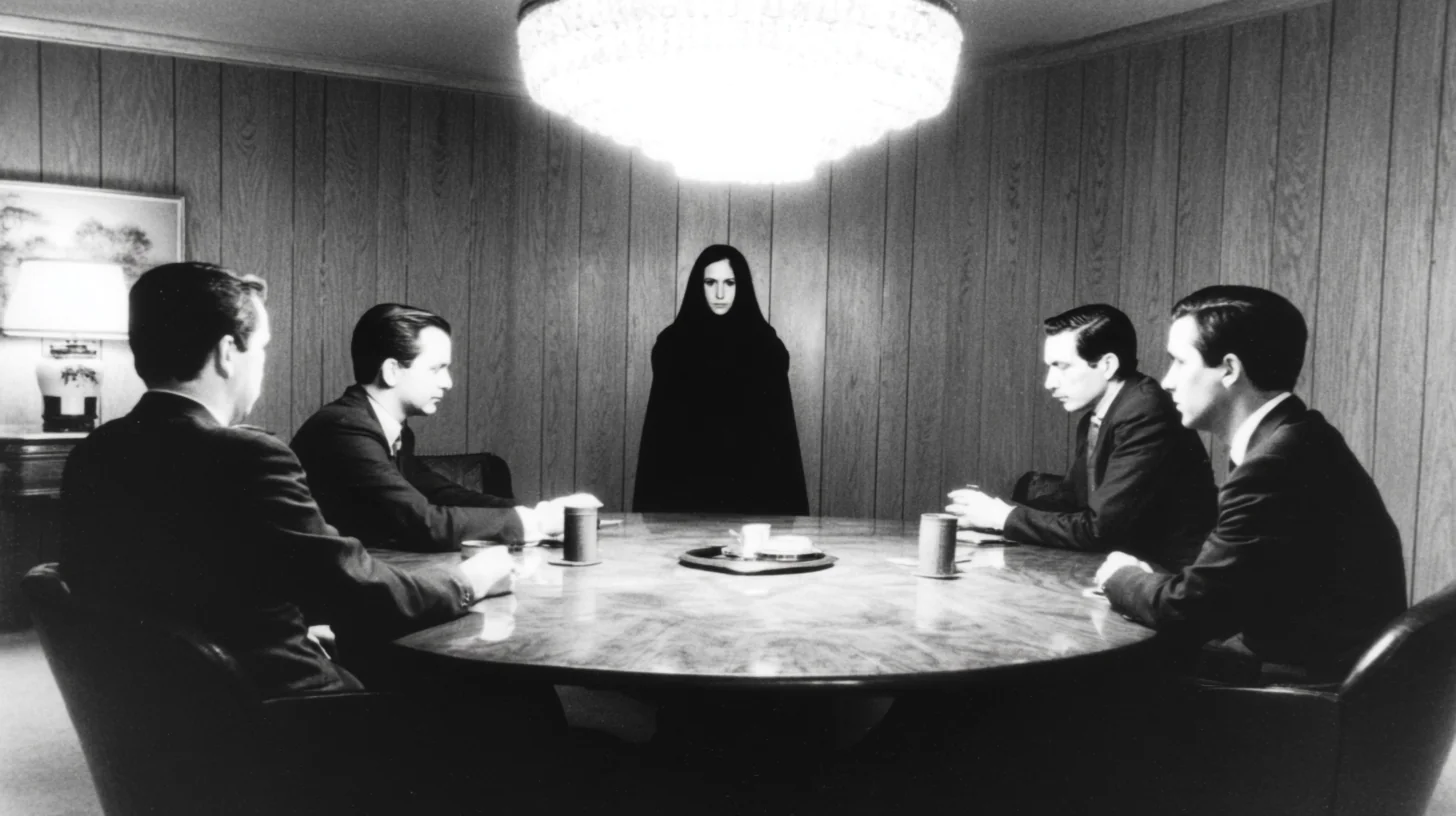
The second is a black-and-white photograph from a 1973 Council meeting of an institution that has never been photographed. The photograph should not exist. The provenance is, by the lights of any reasonable archivist, impossible.
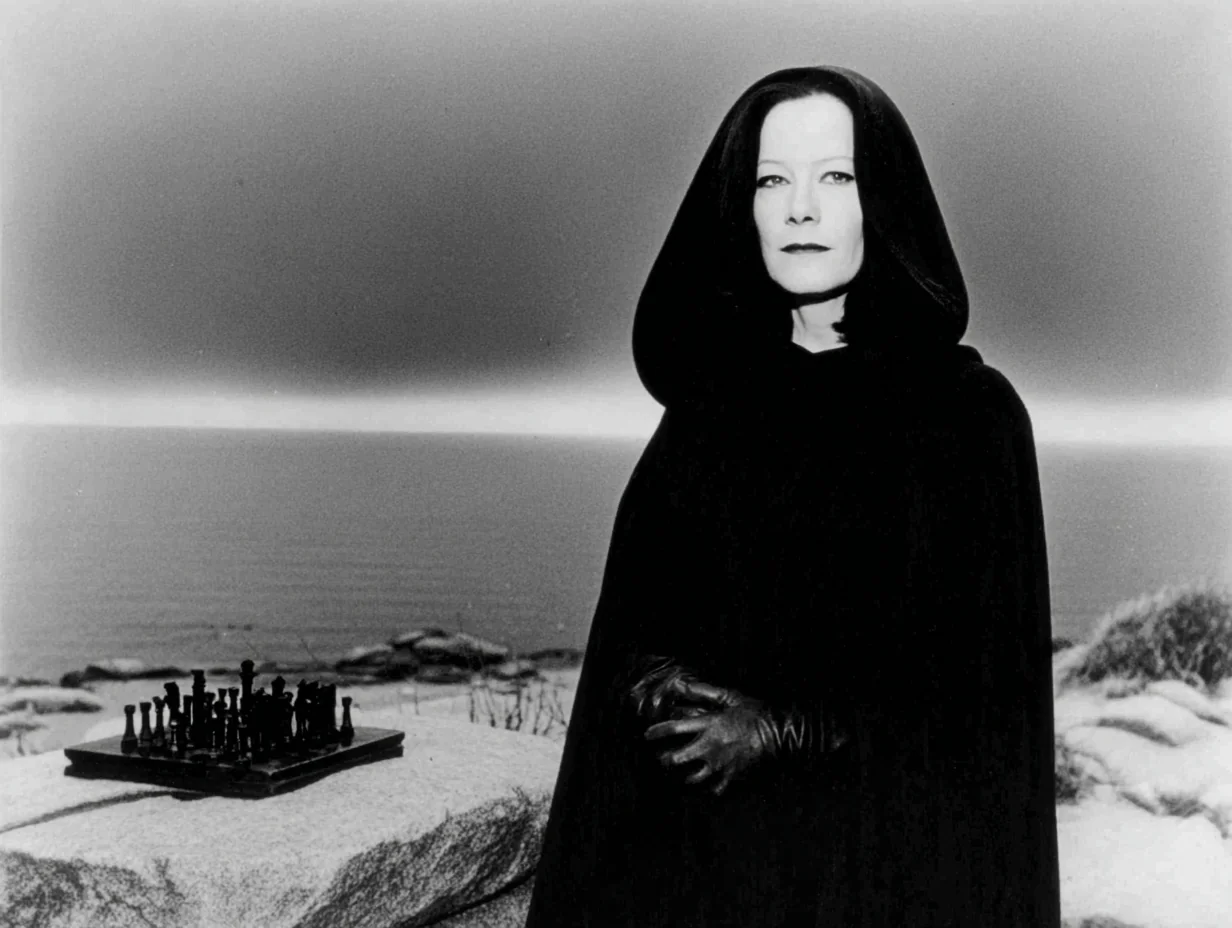
The third is a still from a 1957 film by an unnamed Swedish director who almost certainly was not Ingmar Bergman. The frame does not appear in any extant Bergman filmography. It bears, nonetheless, every characteristic of his cinematographer’s work.
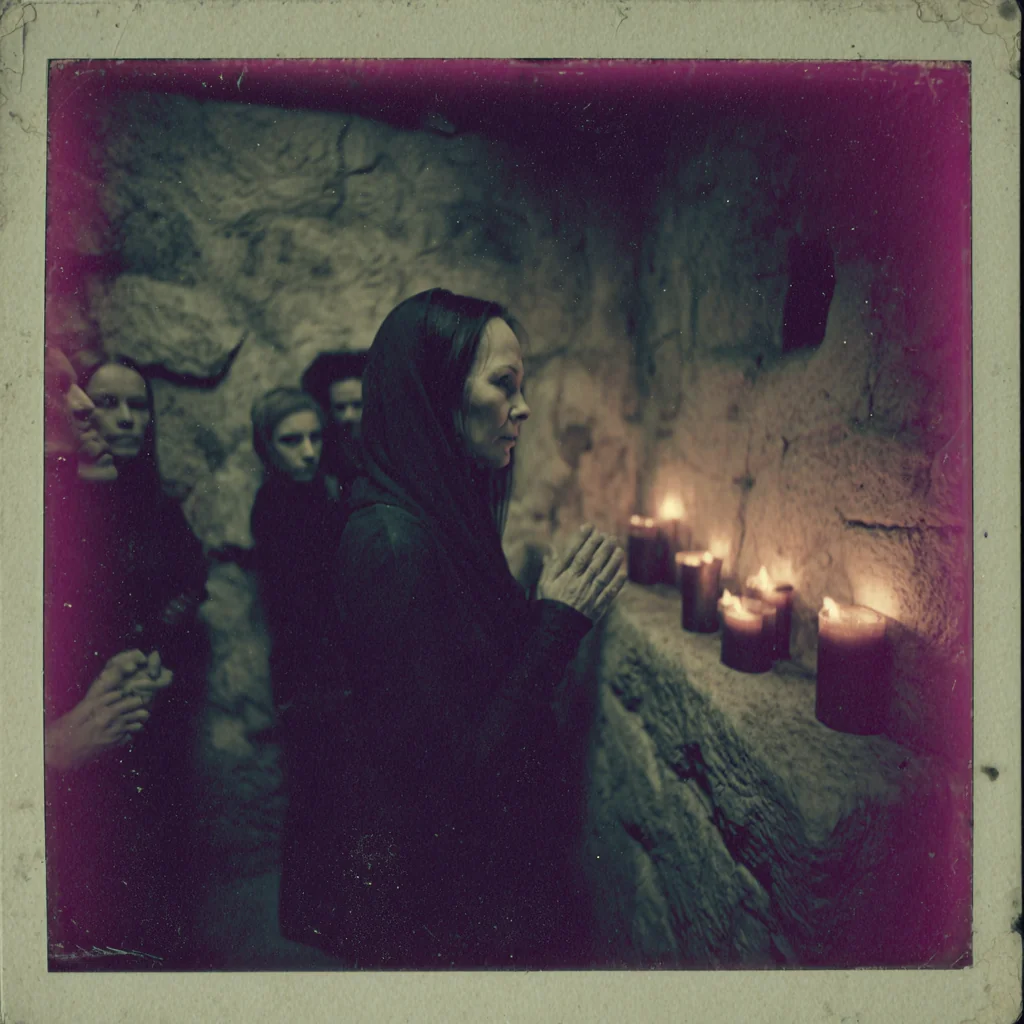
The fourth is a Polaroid dated 1991, recovered from a private chapel in northern Catalonia. The chapel does not appear on any map.
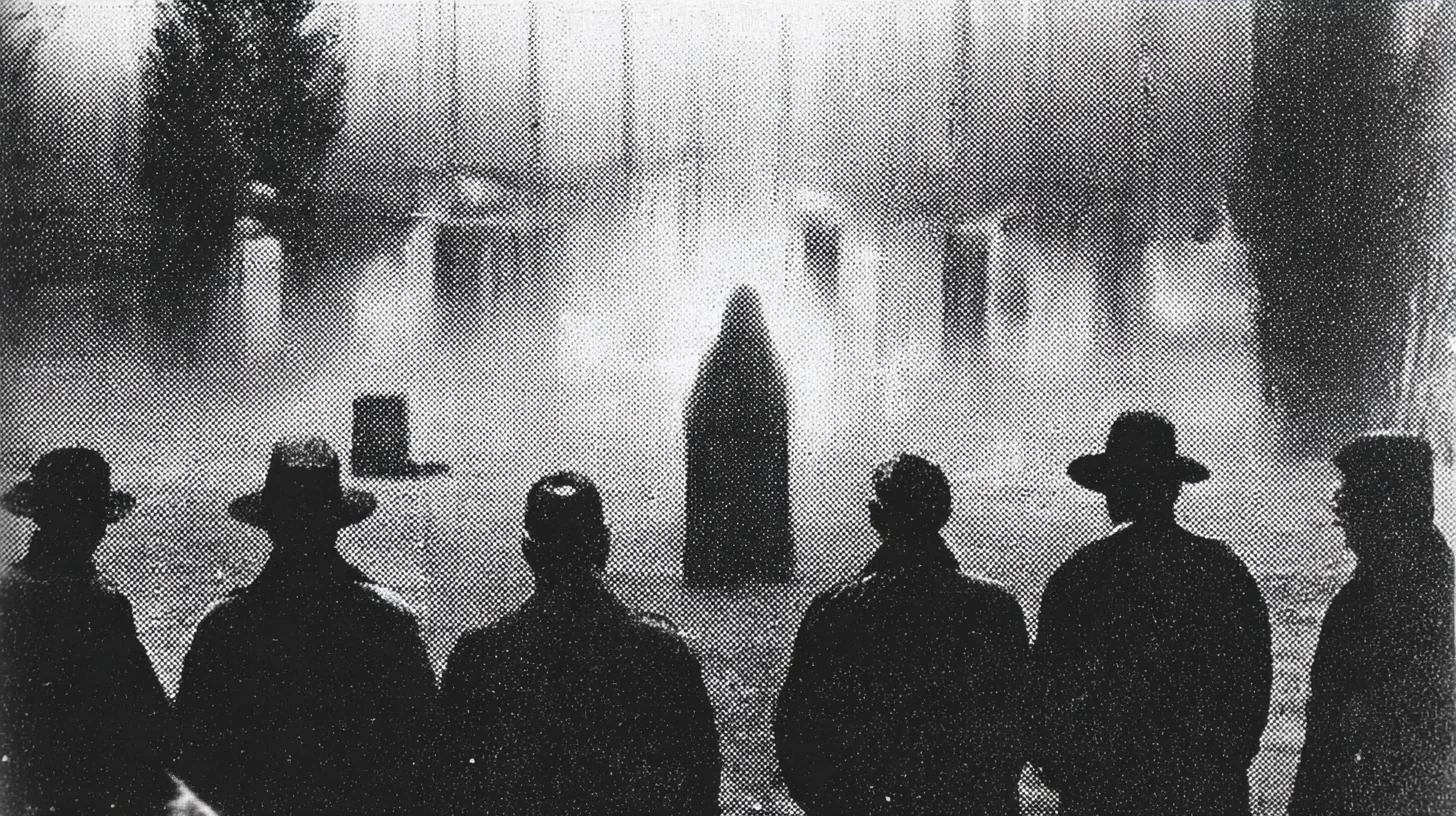
I include also, as the final image, a photograph taken in October 1981 at the funeral of a Hungarian academic named Lajos Karády, whose disappearance is now considered by some of my colleagues to have been the inciting event of the institution’s late twentieth-century operations. She is in the background of the photograph, between two cypress trees. The newspaper that ran the image — a Vienna afternoon paper that ceased publication in 1989 — did not identify the figure. The institution has subsequently confiscated nearly every copy of the issue. I obtained mine through methods I will not describe.
VII. WHAT I AM ABOUT TO DO
I am writing this on the evening of 8 March 2018, in a small office in the Bodleian Library, which I have been told I will not be permitted to enter again after this week. I have already been informed, through channels I trust, that the institution has identified me. I have approximately, I am told, three days.
I do not believe I am about to die. I believe I am about to be Taken, which is a different thing, and which is the institution’s preferred verb for what they do to those of us who reach for what she keeps.
If you are reading this, the document has survived me. Someone — and I do not know who, though I have my suspicions — has filed it where you have now found it. I do not know what use you will make of it.
I hope you will understand that I have been careful, throughout these pages, not to write the Seventh Law down. I do not know it. I have only come close enough to feel the shape of it.
She is real. I am sure of this in the way one is sure of certain things one cannot prove. Whether she is what the institution says she is, whether she is what I have been describing or only what I needed her to be for the last four years of my life — I cannot say.
The Greek physician who burned the papyrus in 298 BC told his successor, in his deathbed account, that she had told him a final thing before she left the wine merchant’s stall in 309 BC. He recorded the final thing in a single line. The line has survived.
It reads:
I am not what you think I am. I am older than that.
— Adrian Heswick
Oxford, 8 March 2018