I had been in Lisbon for forty-one days when the package came under my door, and on every one of those days I had been writing about a labor strike I did not care about.
The strike was at the port. The longshoremen had stopped lifting containers because the containers had been arriving from a holding company in Cyprus with the contracts written in a Latvian that none of them spoke, and the contracts had been demanding that the longshoremen lift those containers at a rate that would have killed two of them per month, which the contracts also pretended to cover in a separate appendix written in the same Latvian. The longshoremen had brought this to their union and the union had brought this to a lawyer and the lawyer had brought this to me, because I had once written a piece in 2019 about a shipping accident in the Bosporus that had been picked up by the kind of European newsweeklies that still had a budget for getting other people angry. I had been told to write a thousand words a Friday about the Lisbon strike for an American outlet that paid in dollars and ran out of opinions about anything — including longshoremen, including containers, including Lisbon — at approximately the same speed at which it ran out of subscribers. I had been told this in January, when the assignment had still seemed like an apology rather than a punishment. I had stayed in Lisbon through the spring because I could no longer afford the apology of moving anywhere else.
By the end of April I had filed fourteen Fridays’ worth and had learned to write the second sentence first. By the middle of May I had developed a working relationship with the night clerk at the Hotel Borges, a man named Acácio who had been a sailor in the early eighties and had a tattoo on his forearm that I would have written a paragraph about if I had still believed that paragraphs about tattoos on the forearms of night clerks were a useful contribution to global discourse. By the end of May the Lisbon evenings had become the kind of evenings that taste like dust even when it is not dusty out, and I had stopped pretending that the labor strike was the reason I was here.
The reason I was here was Maputo, in 2018, which I will get to. The reason I was here was also that I was running out of editors who would still take my calls in the cities I preferred. The reason I was here was that Lisbon was cheap, the rent on the room at the Borges had been paid out of the same kill fee that had also paid for the apartment I had given up in Brussels, and the labor strike at the port could be reported entirely from the bar of a restaurant called Tasca do Chico, where the proprietor’s son had a girlfriend whose uncle was on the union committee. The girlfriend, whose name was Margarida and who had once wanted to be a librarian, was twenty-six and very tired of being treated as a source by foreign journalists who never asked any questions about libraries. I had asked her about libraries the second time I met her. She had been on my side ever since, and I had been writing the labor strike from her uncle’s quotes without ever having to leave Bairro Alto, which was the kind of professional concession that, when I was younger, I would have refused on principle. I was no longer young. I drank Sagres at room temperature. The Tasca smelled like grilled mackerel and old paper. The labor strike was, against all the available evidence of the universe, still going.
That was the geography of my life when the package came under the door of room 412.
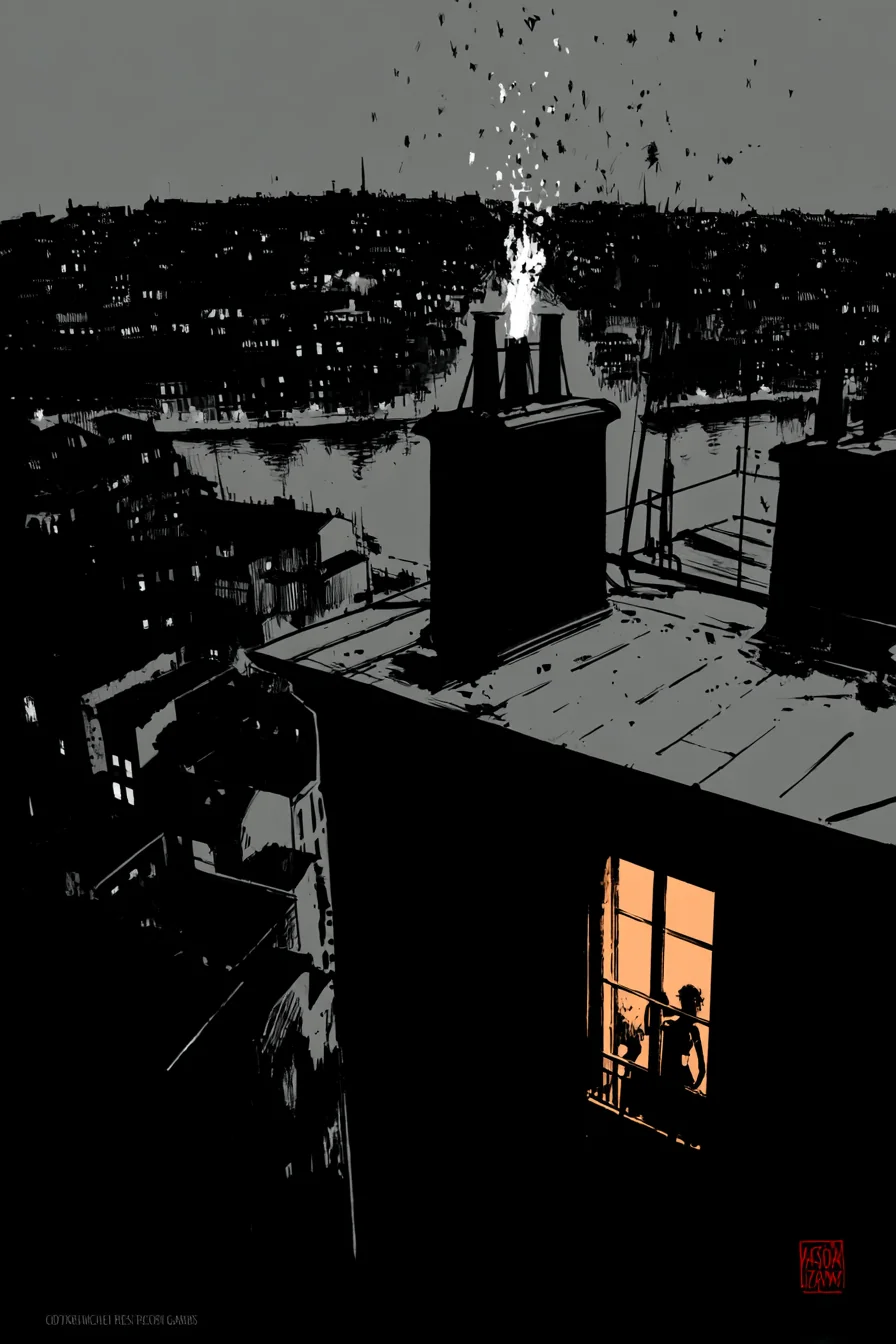
It was four-eleven in the morning. I knew it was four-eleven because I had developed a habit, in Brussels and then in Lisbon, of checking the clock on the bedside table at the moments when sleep stopped being a thing I had been doing and became a thing I would have to negotiate for. The clock at the Borges was a small plastic Casio that had been bolted to the table by someone who had not believed any guest of the Borges should be able to throw it across the room, which suggested that someone had thrown it across the room. I had checked the time. I had registered the number. I had been about to roll over.
I heard the brush of paper on tile.
Anyone who has spent a decade in cheap hotels knows the inventory of small sounds a hallway makes between three and five a.m. The pipe under the radiator in 414 that ticks because the pressure changes. The drunk arguing with his wife on the line from Madrid. The night clerk’s chair on the lobby floor when he gets up to piss. The whirring fan that runs nonstop in the stairwell because the building inspector required it in 2003 and no one has ever bothered to question whether the building inspector still works for the city of Lisbon. The brush of paper on tile is not on the inventory. The brush of paper on tile is the sound of someone delivering something, and at four-eleven in the morning no one was supposed to be delivering anything.
I sat up. I put my feet on the cold tile. I went to the door.
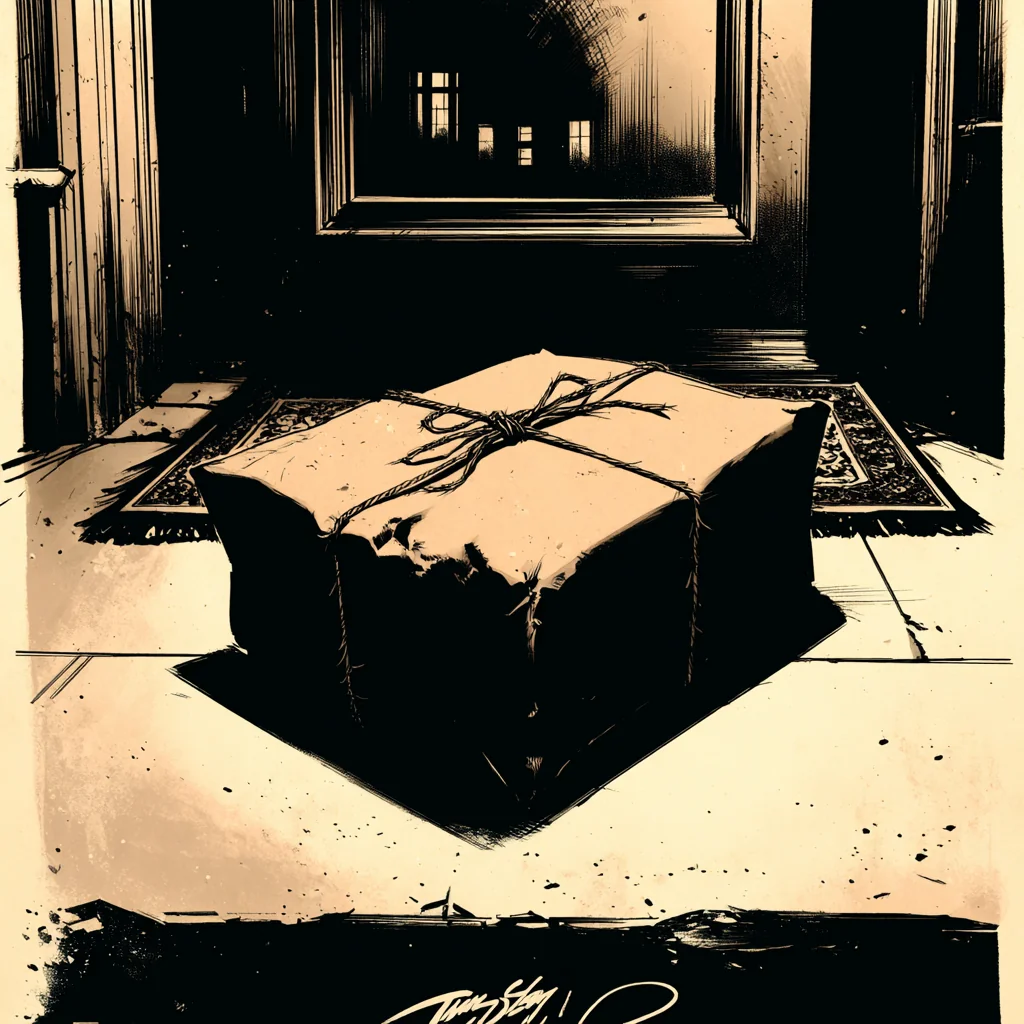
There was a brown paper package on the threshold. It was the size of a hardcover book. It was tied with plain brown twine. It had no address. It had no return label. It had been pushed under the door from the corridor side and had come to rest against the runner with the perpendicular precision of an object that had been positioned by someone who had not been rushed.
I stood in the doorway for what I will tell you was a long time and was probably six seconds.
Then I picked it up.
The Borges, I had been informed in my second week, did not employ a doorman after midnight, and the only stairwells out of the building were the one with the fan and the fire escape at the back, which was chained. I checked the corridor. The corridor was empty. The runner had been swept that day. There was no mark on the tile from boots. There was no scent in the air except the cigarettes the man in 408 was permanently smoking through the gap in his window. Whoever had brought the package had brought it on bare feet or in soft soles and had been gone by the time I reached the door, which meant they had moved quickly and meant they had known precisely how long it would take a woman my age to come from a bed twelve feet from the door.
The first thing I thought, with the cleanness with which one thinks the first thing at four-eleven in the morning, was that I was not going to be writing about a labor strike anymore.
I took the package back to the desk. I closed the door behind me. I did not lock it, which I have thought about since. I sat down. I switched on the small lamp the Borges had bolted to the surface of the desk by the same person who had bolted down the Casio. The lamp threw warm amber across the brown paper, and the brown paper looked exactly like every other brown paper package I had received in my life, which was perhaps the most disturbing thing about it.
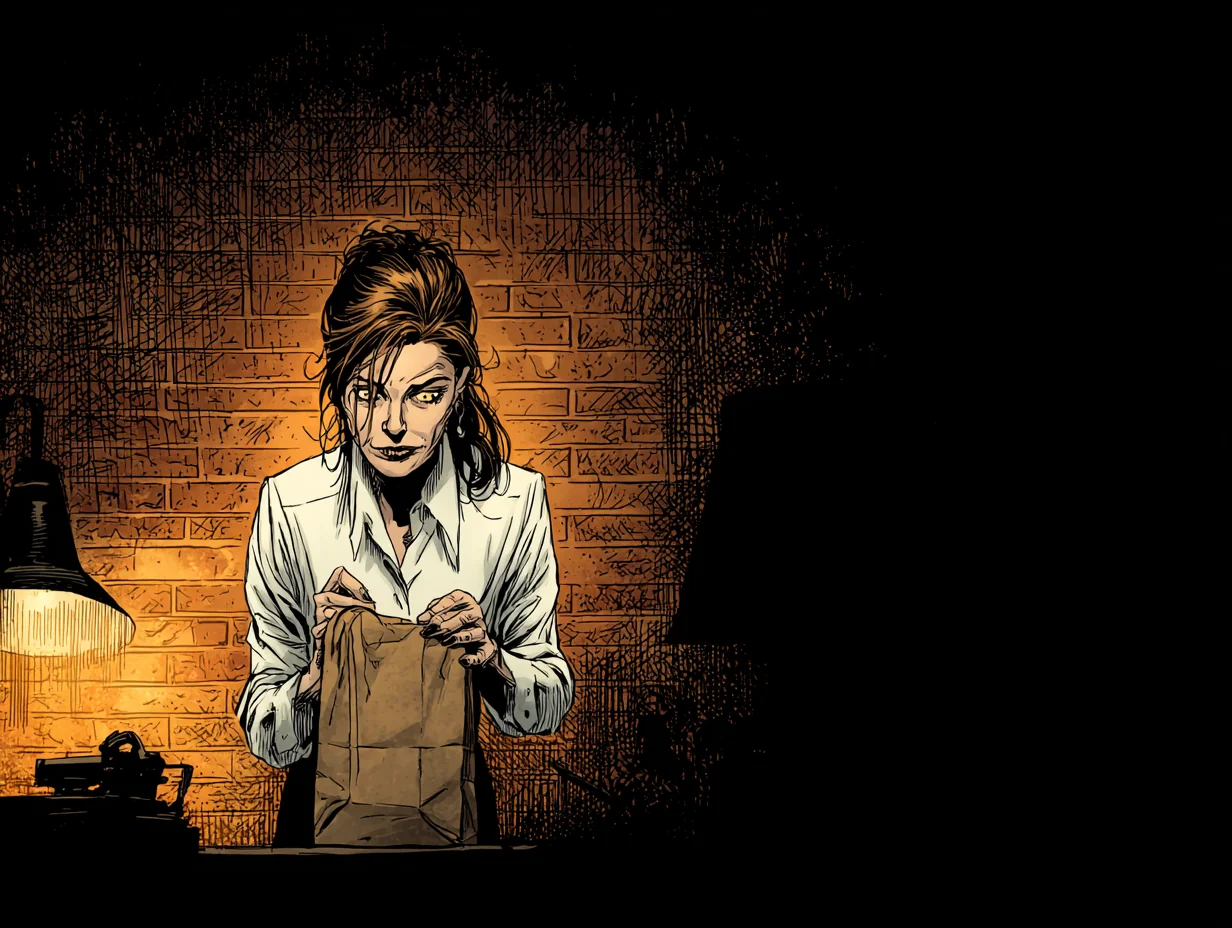
I cut the twine with the small folding knife I had bought from a shop on the Calçada do Combro for nine euros in March and had not yet used for any purpose. The paper fell open in the way paper falls open when it has been wrapped by someone who knows how to wrap. There was nothing inside but a single photograph.
The photograph was four by six inches. It was a black-and-white print made from a negative on what looked, at a glance, like the kind of slow Soviet film that nobody in the West would have used for documentary work but everyone in the Eastern Bloc had still been using in the early eighties because Agfa was four months delayed at the Polish border. The print itself had yellowed the way prints from that era have yellowed, in the uneven mottle of poor fixing. The corners were soft. The image was sharp enough.
The image was of a hospital room.
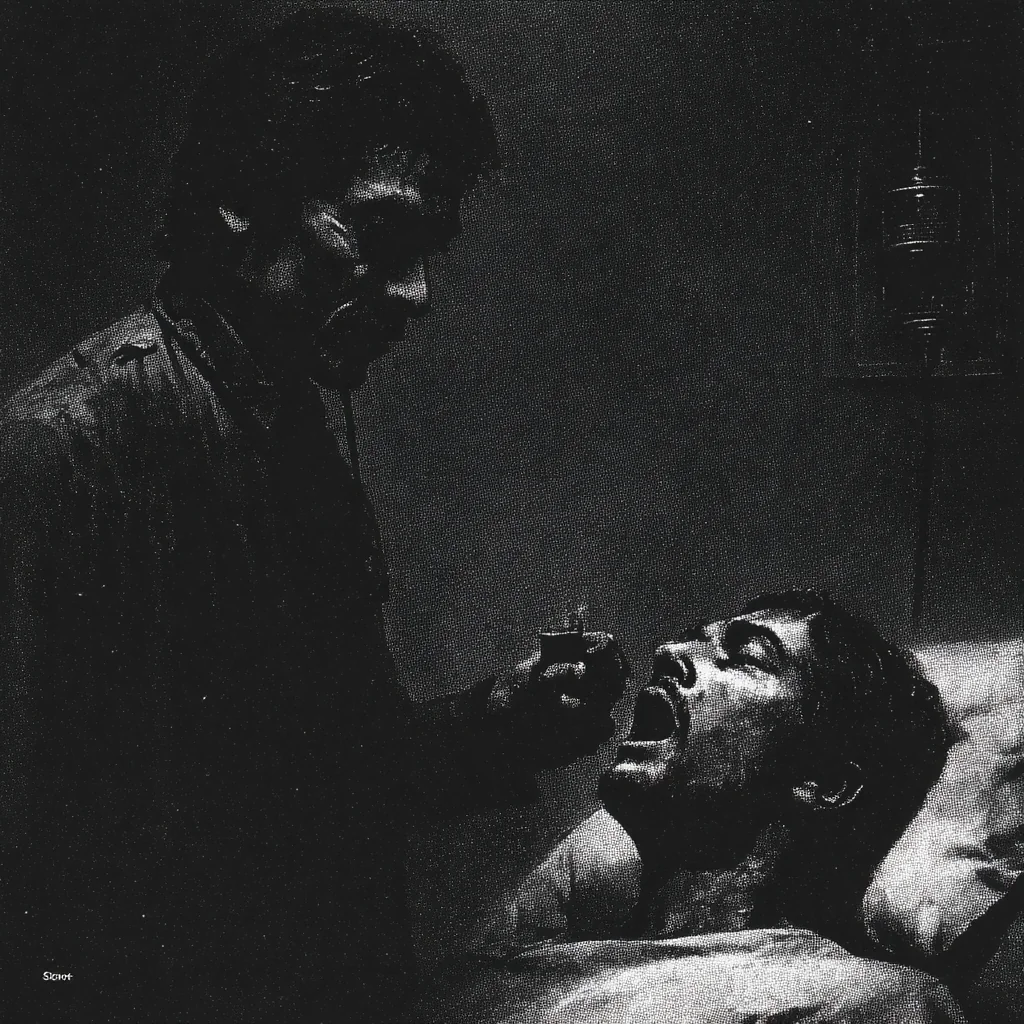
A man was standing beside a bed in the hospital room. The man was perhaps twenty-eight. He was wearing a dark suit that was unremarkable except for being a little too narrow at the lapel, which had been the cut of Yugoslav suits in 1980 and 1981 and the first part of 1982 before the lapel widened again. He was holding a small dark object to the throat of the patient in the bed. The patient was a man perhaps fifty, with the grey-pallor face of someone who had been told something true in the last twenty-four hours, and his eyes were partially open but were not looking at the man with the dark object. The man with the dark object was not looking at the patient either. He was looking, with a precision that I have only ever seen in the eyes of professional people, at the camera.
The camera, which is to say the person holding the camera, had been on the other side of the room. The person had been close enough to make the print sharp. The person had not been close enough to be heard. The person had taken the photograph without flash. There was light coming from the corridor through the open door behind the man in the suit. There was no light otherwise. Someone had wanted very badly for the man in the suit to know that the photograph was being taken. The man in the suit knew. The man in the suit had not looked away.
I knew the room. I knew it because I had been to it. I had been to it in 2014 on assignment for a magazine that no longer existed, doing a piece about the Belgrade military hospital and the things that had been done in it from 1968 through 1992, in the context of an exhibition of recovered surgical equipment that had been held at the time at the Museum of Yugoslav History. I had spent two hours in the very room in the photograph, talking to a docent who had been a nurse there in the seventies. The light through the door fell at the same angle. The radiator on the wall was the same radiator. The bedframe was the same kind of cot the docent had told me, with some pride, had been manufactured at the Ivo Lola Ribar factory in 1959 and had outlived the country it had been built for.
The man in the suit was a man I had also seen.
I had seen him on the cover of The Economist that I had brought back to my room six days ago from a kiosk on the Avenida da Liberdade.
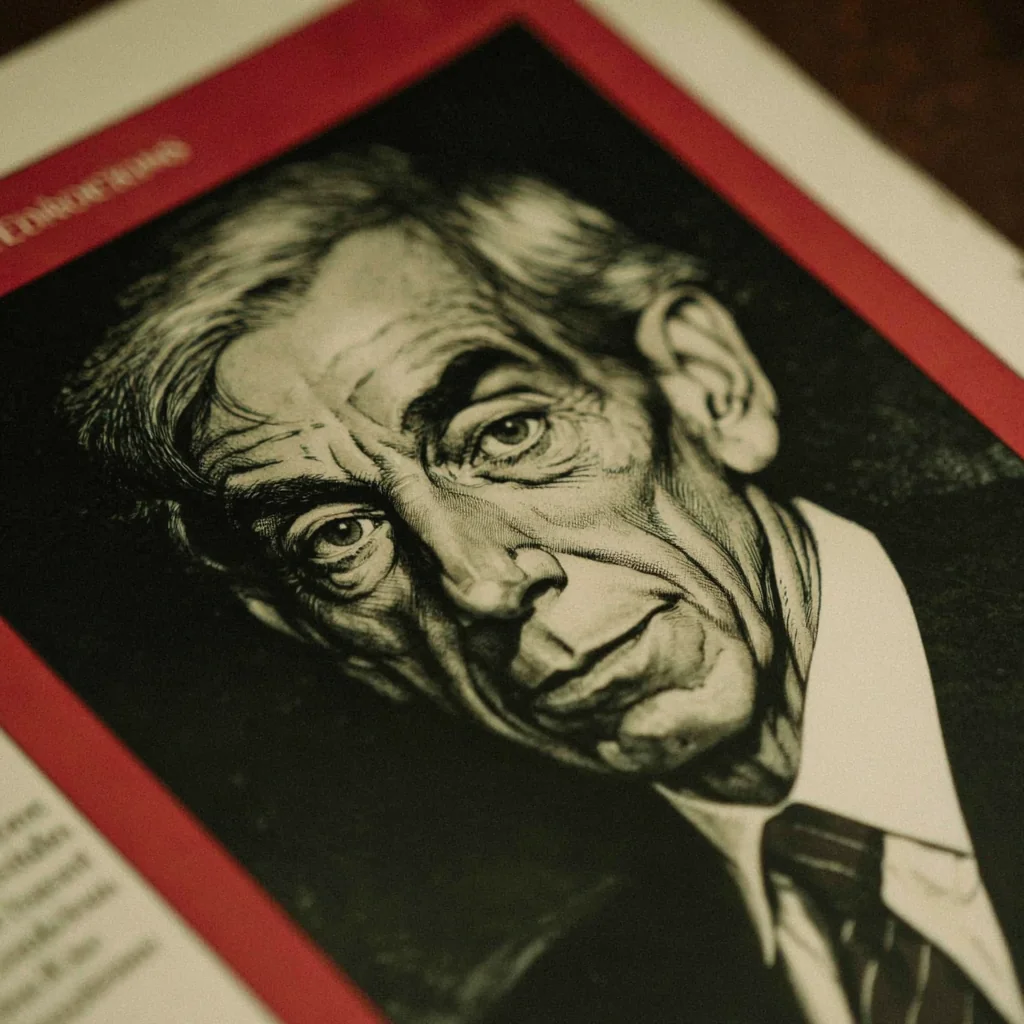
The Economist was on the floor by the bed where I had been reading it. I had not finished the issue. The man on the cover was a man whose name I now knew but will not, in this paragraph, give to you. He was the chair of a private equity firm in London. He had been, in 1981, a junior officer in a Yugoslav security service that had at the time been formally a part of the State Security Administration — the UDBA — but had in practice been operating with the kind of autonomous funding that the UDBA preferred not to acknowledge, because the funding had been coming from a place none of us were ever supposed to know about. He had been twenty-eight in 1981. He was sixty-six on the cover of The Economist. He had grey hair on the cover and dark hair in the photograph. He had a small scar above the left eyebrow that you could not see in the cover because the cover had been retouched but that you could see in the photograph because the photograph had not been retouched by anyone alive. He was the same man.
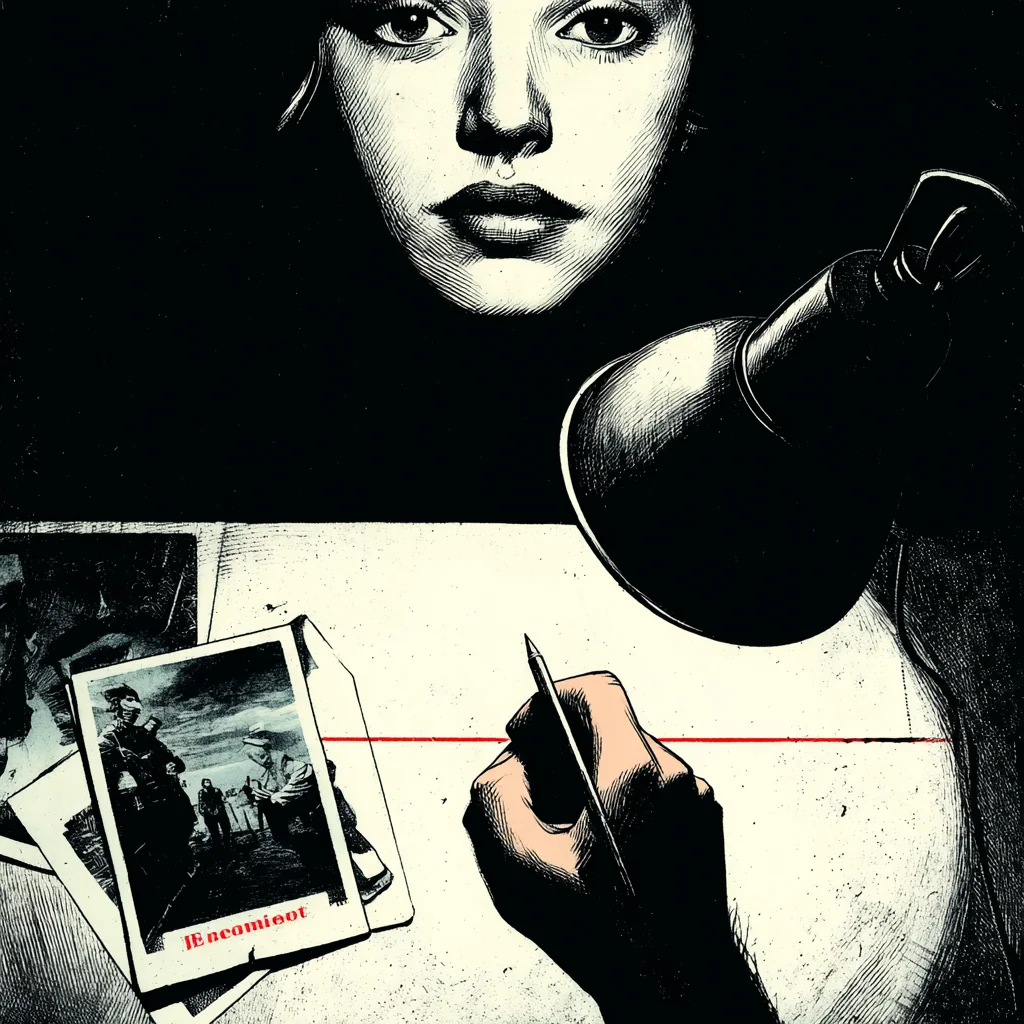
I sat at the small desk in the small room at the Hotel Borges in the early hours of a Friday morning in the autumn of 2026 and I crossed my forefinger from the man in the photograph on the desk to the man on the cover of The Economist on the floor and the cleanness of the line my finger drew between them was the cleanness of a line in a courtroom.
Whoever had sent me the photograph had known I had been to that room in 2014.
Whoever had sent me the photograph had known I had The Economist on the floor.
Whoever had sent me the photograph had been watching me long enough to know the cleanness with which my finger would draw the line between the two.
Here is a thing about reporters.
The good ones — and I should say at this point that I am not, by any of the conventions that matter, a good one anymore, but I have been around them long enough to know — the good ones develop, somewhere in the first decade, an internal alarm that goes off when a story is the wrong story. The wrong story is the story you have been handed for reasons you have not been told. It is the story whose source has been generous in a way the source’s life does not otherwise account for. It is the story your editor has called you about at home, on a weekend, with a vagueness about timeline that suggests timeline matters. It is the story that arrives, in other words, like a brown paper package under your door at four-eleven in the morning, in a city you do not belong in, six days after you have been on a kiosk for the only issue of The Economist that was going to put the cover photograph in your hands.
I had been a reporter who had, at the right moments, listened to the alarm. I had refused, in 2009, the second of three pieces I had been offered about a banker in Geneva who had been very generous in a way that his job did not otherwise account for, and I had been correct to refuse, because the first piece had been published by someone else and the someone else had spent the following eleven months explaining to his lawyer why he had agreed to write what he had written, and the third piece had killed a stringer in Athens whose name I would prefer not to type into this document. I had refused, in 2013, a piece in Mogadishu that had come to me through a Norwegian intelligence officer whose generosity had not made any sense at the time and made even less sense in retrospect. I had refused, in 2016, a piece about a Russian oligarch’s nephew that had been offered to me by an outlet that paid like the CIA pretending to be a magazine, which is to say enough to pay your rent but not enough to retain your soul. I had been a reporter who knew when the package was wrong.
Then I had said yes, in 2018, in Maputo, to a piece I should not have said yes to, and the source of the piece had been killed inside the hotel where I had agreed to meet him for the second of two meetings, on the morning the second meeting was supposed to happen, in the room three doors down from the room I was eating breakfast in. The source’s name was Tomás Cossa. He was thirty-four. He had been a port inspector. He had wanted to talk about a shipping route. The shipping route had been the entire piece. The piece had not run, because the editor who had commissioned the piece had been told, by a person whose name I do not know to this day, that the piece would not run. The editor had told me this in person, at a bar in Stockholm two months later, over a Negroni he had paid for, in the kind of voice an editor uses when they are letting you understand that the conversation you are having is the closest thing to a funeral Tomás Cossa is going to get.
Tomás Cossa had been the last source I had run on instinct. I had been correct about Tomás Cossa, and the correctness had killed him, which is the sort of correctness that a reporter has to learn to live next to but is not, in my experience, the sort of correctness that you ever stop hearing in the small hours.
I had stopped, in other words, listening to the alarm. I had spent eight years writing the kind of pieces that the alarm did not concern itself with — port closures, container ships, the labor strike at Tasca do Chico, the docent at the Museum of Yugoslav History who had not had a year as bad as Tomás Cossa’s. I had been told, by myself and by the editor in Stockholm and by the editor in Brussels and by Acácio at the desk of the Borges, that this was the sensible arrangement of a career that had outlived most of the people who had thought it would amount to something. I had agreed.
The alarm was going off now.
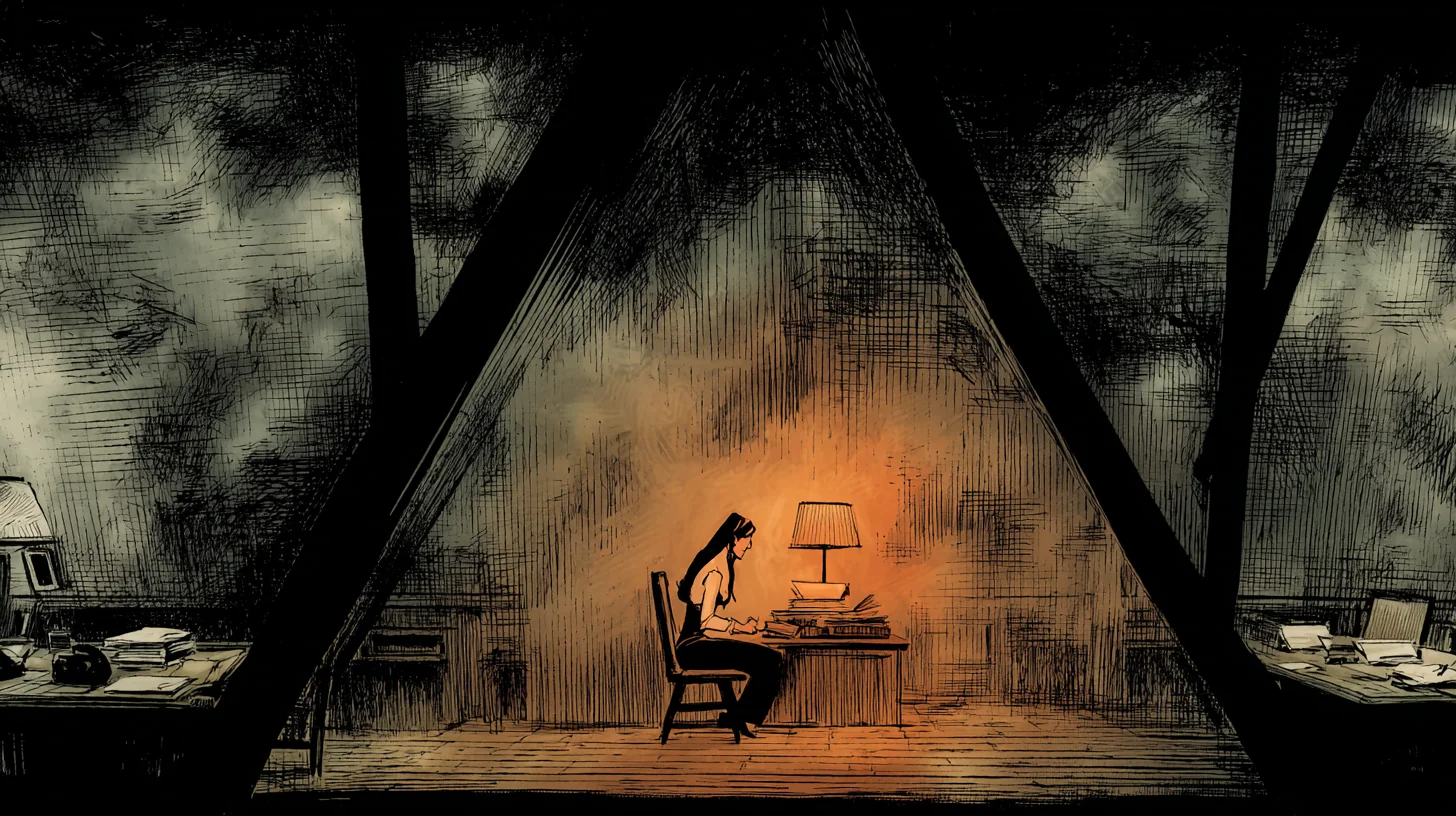
The alarm was going off the way it had gone off in 2009 with the Geneva banker and in 2013 with the Norwegian and in 2016 with the oligarch’s nephew, only louder, because the package on the desk in front of me was the cleanest piece of bait I had ever been offered, and a piece of bait that clean meant that someone with a great deal of patience had decided, weeks or months in advance, that I was the reporter they wanted to hand it to.
The question, which I sat with for a longer time than I have sat with most questions, was who.
The question, which is the question you have to ask second, was what they wanted.
Three thousand and ninety kilometers from the Hotel Borges, in a building that does not appear on any map of the city in which it stands, seven people sat around an oval table that had been carved in 1797 from the heartwood of a single English oak.
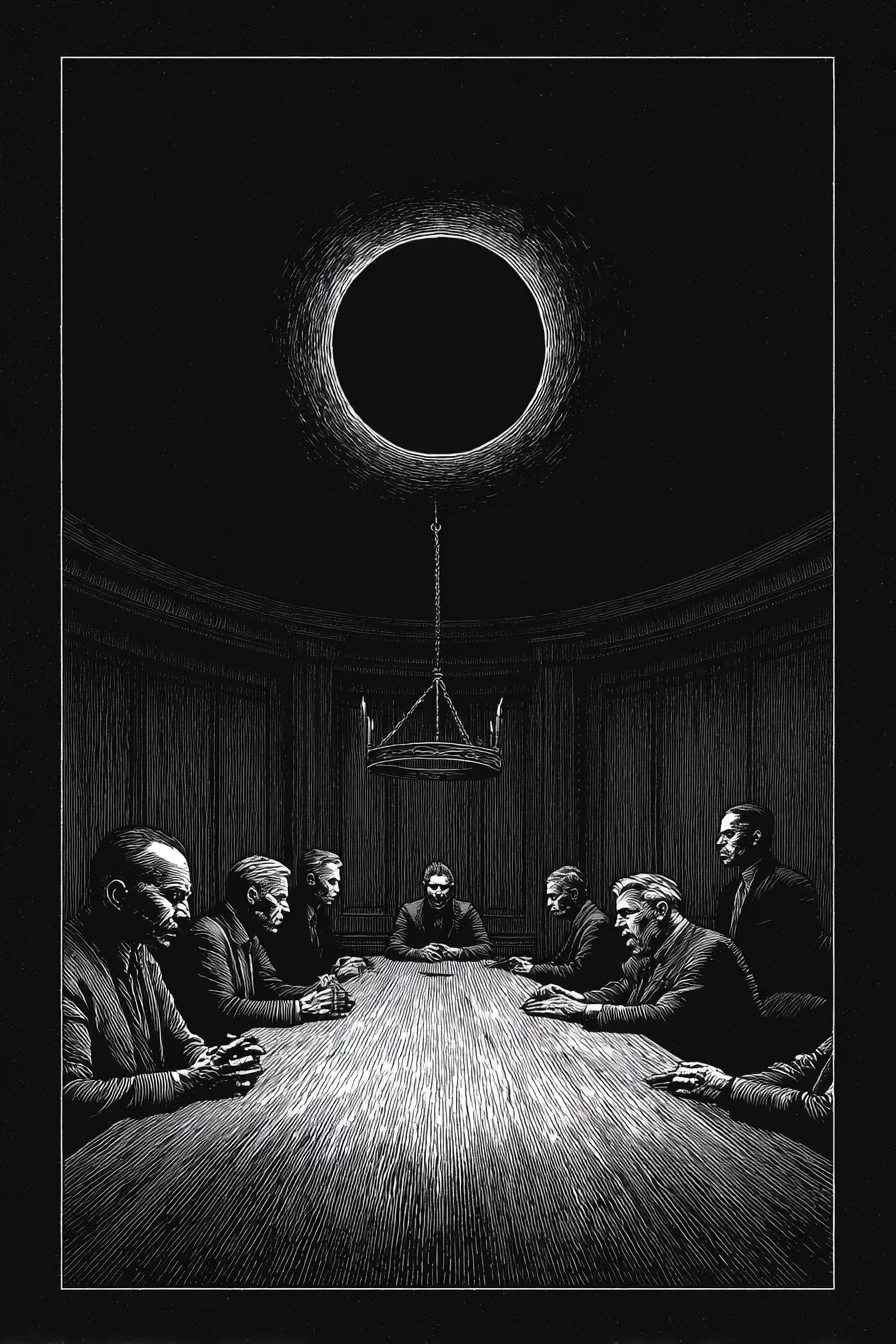
The table was thirteen feet long. The room was lit by a single brass chandelier that hung six feet above the surface of the table and held forty-eight candles, which had been replaced that afternoon by a man named Hennig who had been replacing the candles in that room every Tuesday and Friday for thirty-one years and who had never been told whose candles he was replacing.
The seven people had not been photographed. The seven people had not, in the formal sense of the word, been seen together by anyone outside the room since the meeting that had been held in this room on the night of the second of April, 1981, at which a junior officer in the Yugoslav security service had been authorized to remove a man named Vasilije Nikolić from the Belgrade military hospital, and at which the same junior officer had been promised, in writing of a kind that had since been destroyed, the patronage and the protection of the people in the room for the remainder of his life. The junior officer was now sixty-six. The junior officer was on the cover of The Economist that month. The seven people in the room knew this. The seven people in the room had not, at the meeting that had been held that Tuesday — the meeting that was currently underway — expressed any opinion about the Economist cover. The Economist cover was not the subject of the meeting that was currently underway. The seven people in the room had agreed in 1981 that the junior officer was to be permitted to surface, in the world, at a level commensurate with the patronage that had been promised to him, on the understanding that the surfacing would be managed by the people in the room. The cover was the surfacing. The cover had been managed.
The subject of the meeting was something else.
The subject of the meeting was that a courier in Lisbon had been seen, four hours earlier, leaving the Hotel Borges by a route that the courier had been instructed not to use. The courier had not been seen by anyone the people in the room had previously placed in Lisbon. The courier had been seen by an audit camera in the lobby of a building across the plaza from the Borges, a building that was the property of an Italian shipping concern that was not, on any document filed in any registry of which the people in the room were aware, a property of the people in the room. The audit camera had not been a camera the people in the room had installed. The audit camera had been a camera that had previously, in October of 2023, been moved from the second floor of the building to the third floor of the building, and had previously been pointed at the loading bay, and had now been pointed at the door of the Borges. The audit camera had been pointed at the door of the Borges by a person whose identity had not yet, that Tuesday, been determined.
At the head of the table, the man whose name was Simeon Hospodar — and whose name was known to be Simeon Hospodar by the people in the room and by approximately fourteen other persons living, none of whom were currently in the city the building stood in — said:
“Find the camera. Find the person who moved the camera. Bring the person here.”
The person to his right, whose name was Augustin Backstrom, said:
“And the journalist.”
Hospodar did not look at Backstrom when he answered. Hospodar did not look at anyone in the room when he answered. He had been told by his predecessor, in 1972, that the head of the table did not look at the table when the table was being asked to do something it had not previously been prepared to do.
“The journalist,” Hospodar said, “we have until she begins.”
Across the plaza from the Hotel Borges, on the fourth floor of a building that had once been a granary and was now leased by an Italian shipping concern, a man in his early-to-mid forties stood at a window and watched a woman at a fourth-floor window directly opposite turn off a small bedside lamp and then turn it back on.
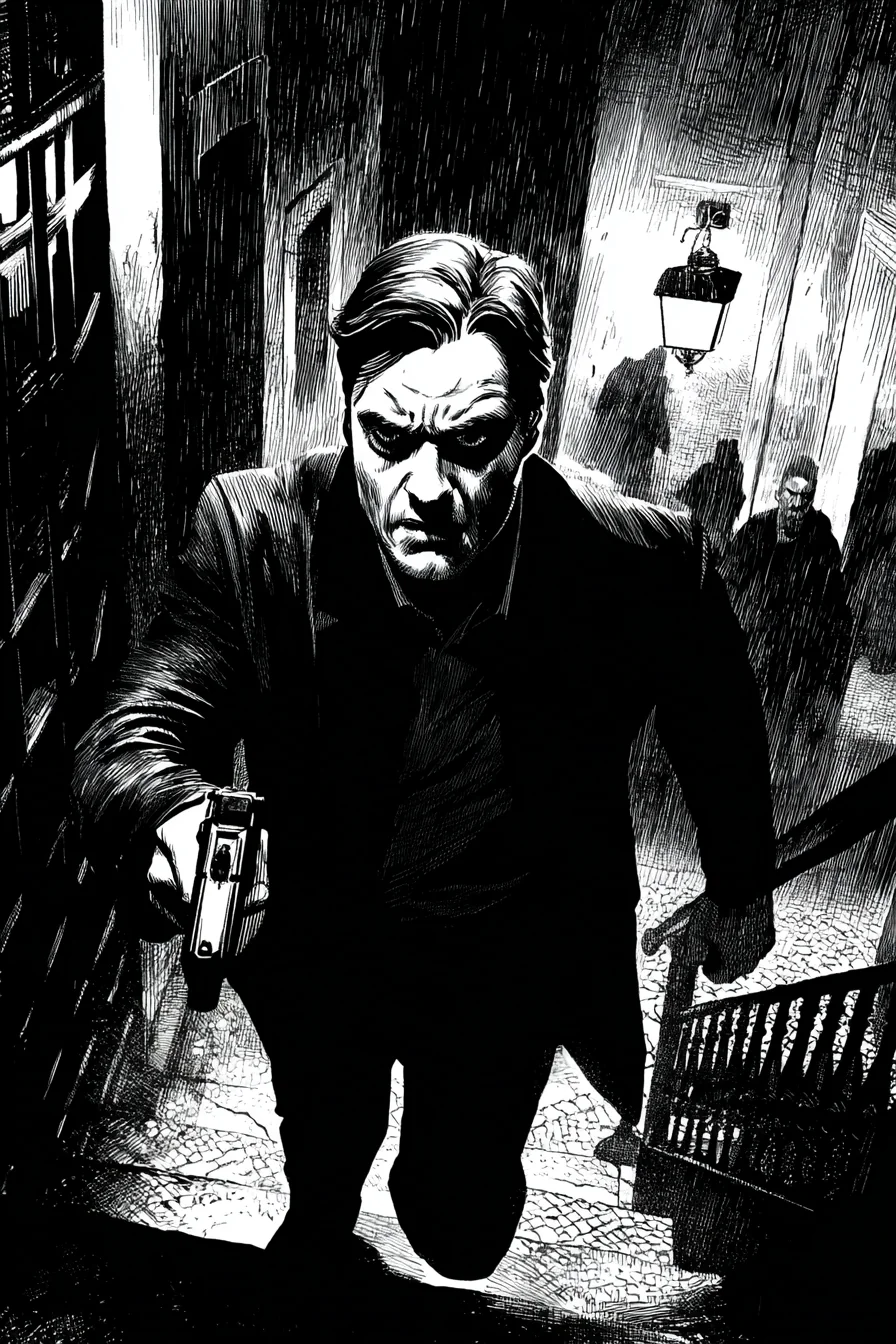
He did not move when she turned it off. He did not move when she turned it on. He was waiting for her to come to the window, which she did not, because she was sitting at the desk between the bed and the window with a brown paper package she had not yet finished looking at.
He stood at the window for the length of time it would have taken her to read a single page of a typed document. Then he stepped back from the window. He left the room. He descended the stairwell of the building four flights to street level. He crossed the plaza at a pace that was not slow and was not fast, in the manner of a person who is going somewhere they have already been a great many times. He did not turn his face up toward her window.
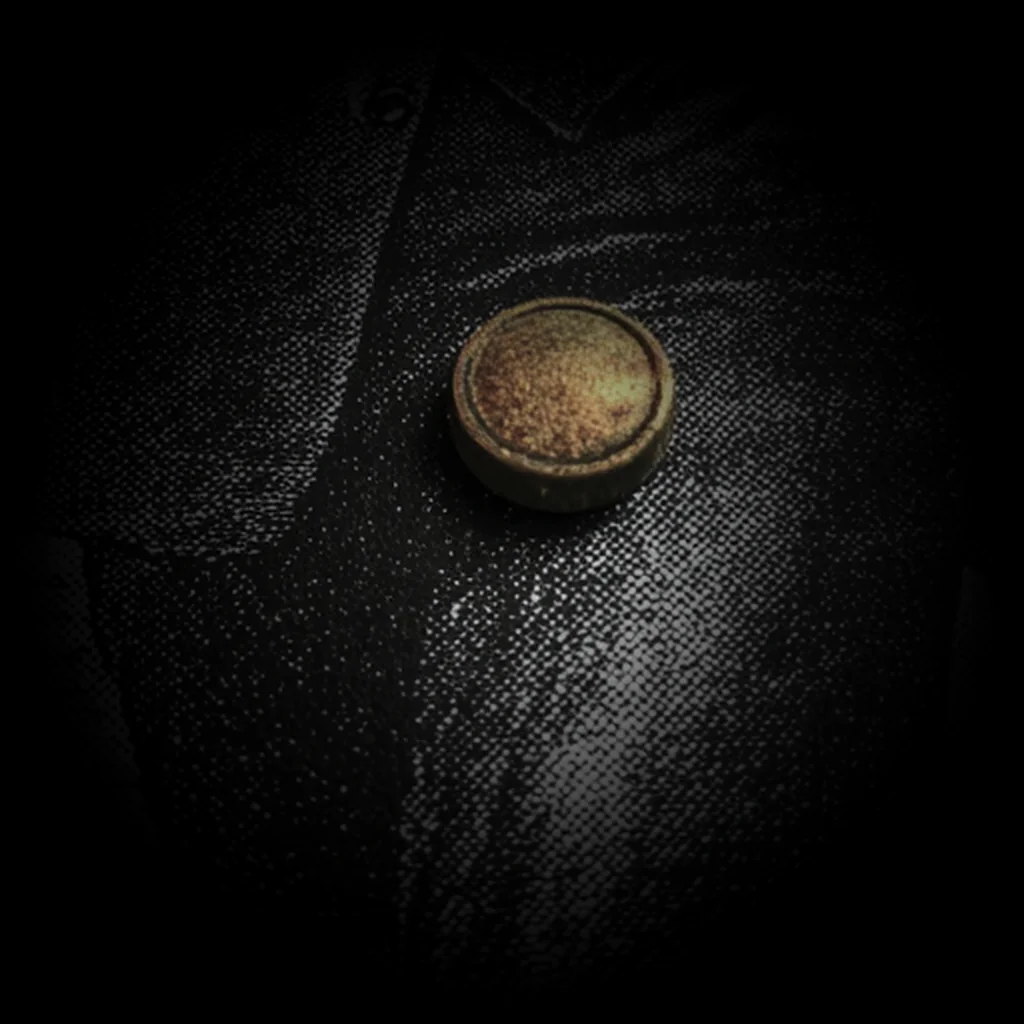
A single object dropped from the right-hand pocket of his suit jacket as he crossed the plaza and came to rest in the gutter beside the streetlamp at the foot of the building she was in. The object was a brass shell casing. It had been fired, four months earlier, in a residence in the seventh arrondissement of Paris, into the back of the head of a man whose obituary had since run in three newspapers without the use of the phrase suffered an unfortunate accident. The casing had been kept, by the man who had now crossed the plaza, in his right-hand pocket. The casing had been kept on his person, in fact, every day since.
He continued walking.
The woman at the window above did not look down.
I did not sleep.
By six in the morning I had pinned the photograph to the wall over the desk with a thumbtack I had taken from the back of a print of a Calouste Gulbenkian exhibition poster the Borges had hung in 1989 and never updated. I had taken down the poster. I had used the back of it as a corkboard. I had not yet, that morning, articulated to myself why I was doing this. I had done it because it was what my hands had decided to do without any input from my brain, and because the room in the Borges had not, in the forty-one days I had been in it, contained any object I had personally chosen to put on its walls, and because the act of pinning something to a wall is the act by which a journalist tells herself that she is going to begin.
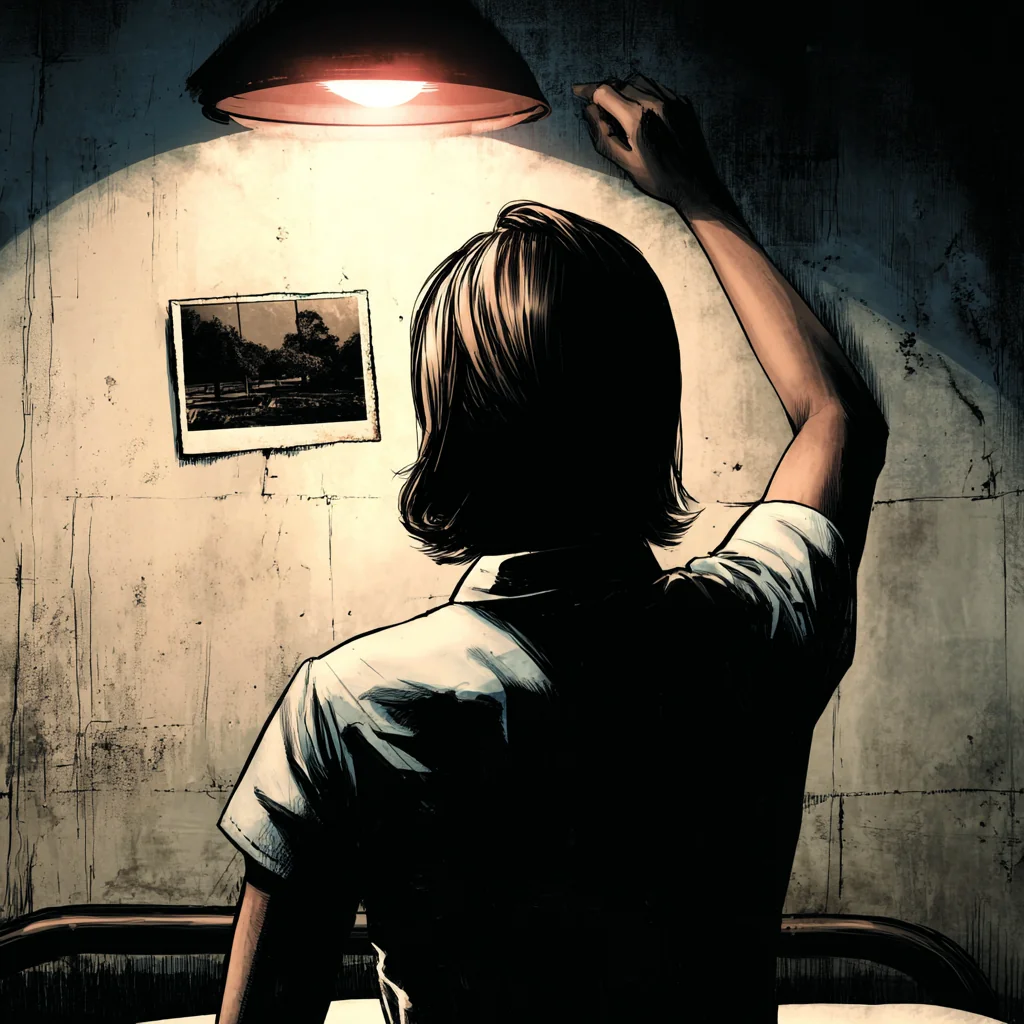
By noon I had three names. I had the man on the cover of The Economist, whom I will not in this section give to you. I had a name I will likewise not yet give to you, which had come to me from a piece I had written in 2014 for the magazine that no longer existed and which had at the time been edited down by my editor on the grounds that the name was not a name anyone in the West had been interested in, and which I now retrieved from the third drawer of the filing cabinet I had shipped to Lisbon in March and had not opened until that morning. And I had a name I had not previously known, which I had read in the obituary section of the Diário de Notícias the previous Sunday and had circled in pencil, for reasons I had not at the time been able to give myself, on the kind of instinct the alarm sometimes hands you in advance of telling you why.
By two in the afternoon I had eleven names. I will not list them. I had cross-referenced them against an old printout I kept folded in the back of my passport, the kind of printout one keeps when one is the kind of reporter I used to be, and which contained twenty-seven names I had collected over twelve years from people whose names I am not going to mention either. Eleven of the twenty-seven were on my wall by two in the afternoon. The other sixteen, I had begun to understand, would be on my wall before the week was out.
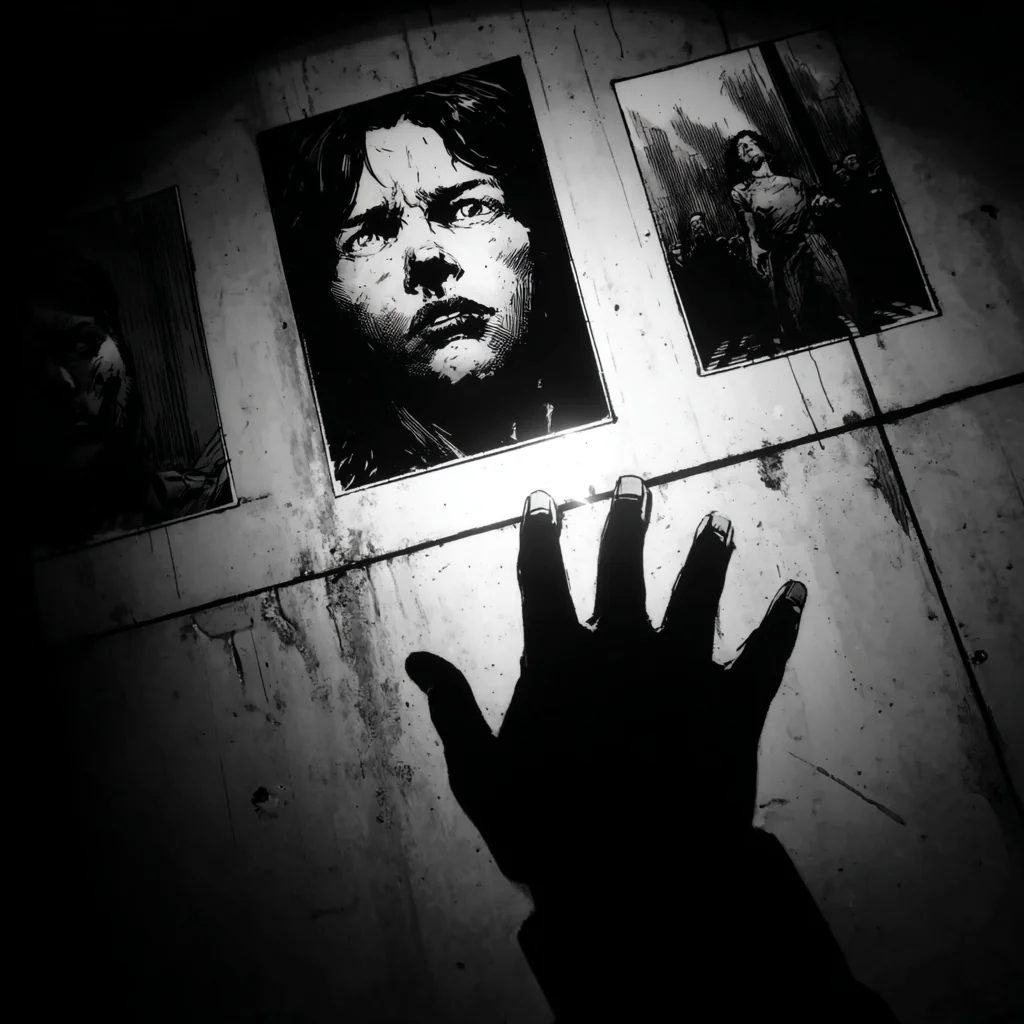
I went out at four. I bought, at a stationer’s on the Rua Garrett, four packets of red embroidery thread and a packet of thumbtacks and a bottle of India ink and a number-two camel-hair brush and a stack of A3 sheets of white card stock. The shopkeeper rang up the purchase without comment. I have wondered since whether he wondered. I will never know. I came back to the Borges by way of the Tasca, where I had a single cup of coffee at the bar without sitting down, and where Margarida looked at my face and asked me, in the kind of voice in which a person who used to want to be a librarian asks a question, whether I was all right. I told her I was all right. I have wondered since whether she believed me. She told me later — a different conversation, a different month — that she had known immediately that I was not. We do not, in the moment, give each other the things we will later say we knew.
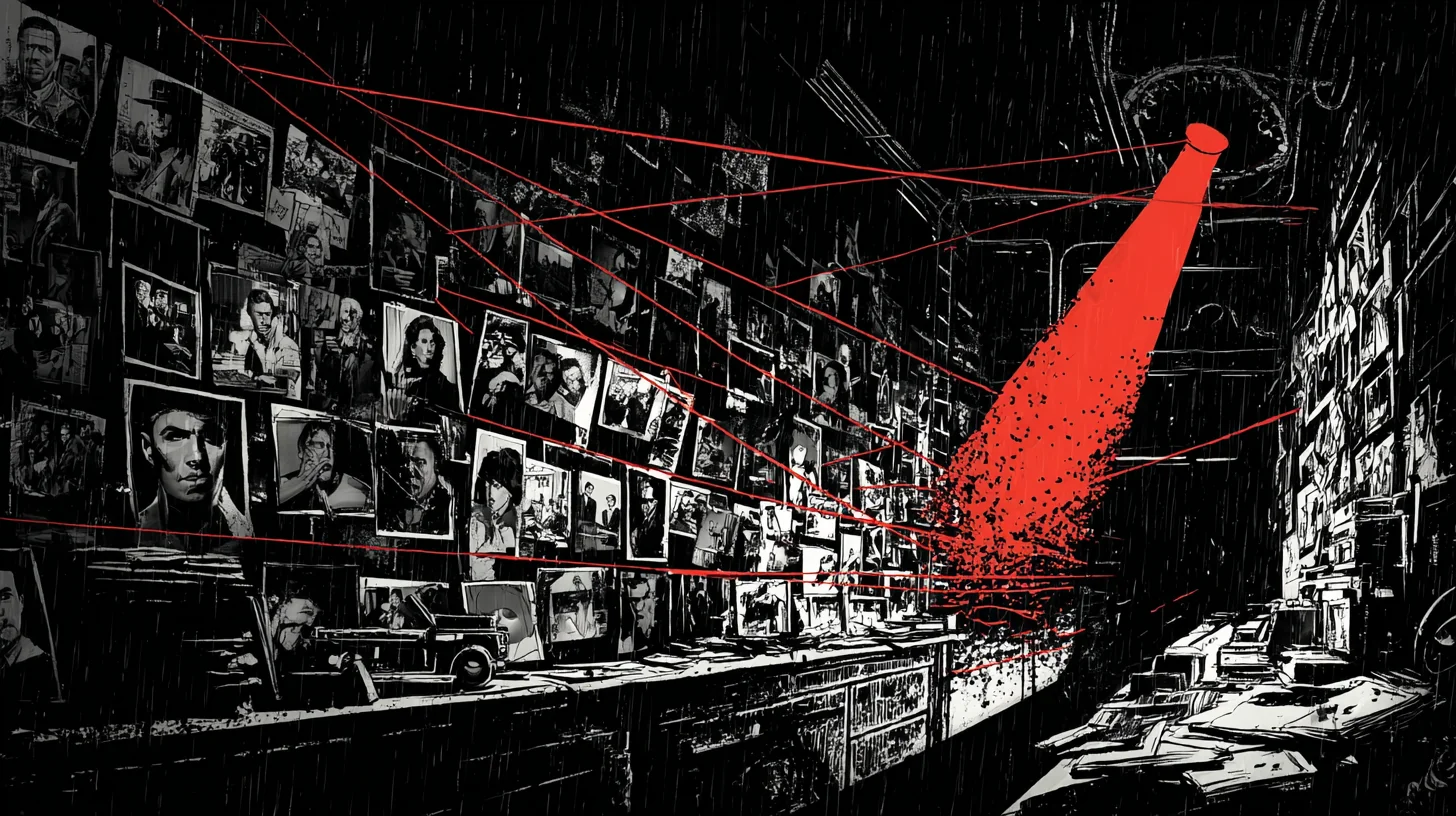
I came back to room 412 of the Hotel Borges. I closed the door. I did not lock it. I sat down at the desk. I opened the bottle of India ink. I dipped the camel-hair brush. I drew, on a sheet of A3 card stock, a single circle.
The circle was not perfect. It was, in fact, a little oval at the top. It was, in fact, a little thick on the right where my hand had pressed harder. It was, in fact, a circle of the kind that I had spent eleven years writing for a wage in the kind of magazines that never published circles. It was the circle. I knew it was the circle the way a reporter who has spent a decade not listening to her alarm knows when the alarm is the only sound she has left. I pinned the circle to the wall above the photographs. I sat at the desk and I looked at the wall.
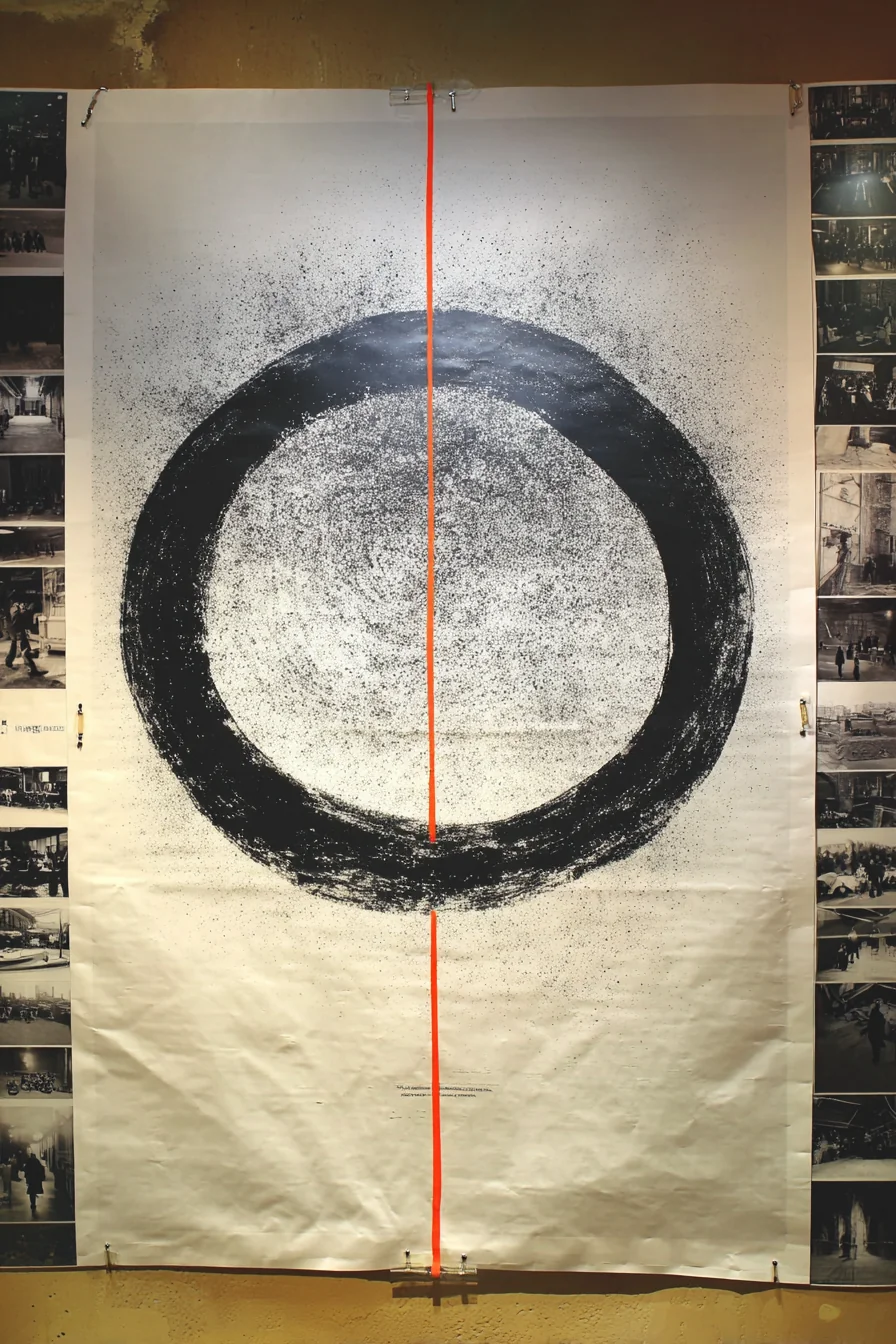
The wall said back: this is the story you have been waiting your entire life for, and the people who sent it to you have been waiting too, and they have not sent it to you because they like you.
The wall said back: they have sent it to you because they have decided, for reasons you do not yet understand, that you are the one who is going to write it.
The wall said back: they have not, in this decision, asked for your permission, and they are not going to ask.

I sat at the desk for what may have been an hour and may have been three. I do not know when I fell asleep. I do not know when I dreamed, because what I dreamed was Belgrade in 1981 and I have dreamed Belgrade in 1981 several times since 2014, and the dreams have not, in any of those years, told me anything I had not already typed into a notebook the next morning.
I woke at six in the evening to a knock at the door.
It was not Acácio. Acácio did not knock. Acácio rang the room phone if he needed to speak to a guest, because the Borges had been built before knocking was a thing the management of a Lisbon hotel would have considered appropriate, and Acácio had been at the Borges long enough to have continued the building’s preferences. It was not Margarida. Margarida had no reason to be at the Borges and had never, in the forty-one days I had been there, come to the Borges.
I went to the door. I stood at the door. I listened.
A second brown paper package slid under it.
End of Chapter One.